
Three days into our first family trip to Bali, I am standing in a lane in Canggu watching my ten-year-old attempt to smuggle a street dog into our villa. Not a small, manageable dog. A large, amber-coloured, visibly flea-ridden dog who has adopted Lulu with the devotion of a long-lost relative. She has named her Lola. She is already negotiating terms.
"We can put her in the luggage, Mum."
I explain, for the third time that afternoon, about Australian quarantine laws. Lulu listens carefully. She does not accept the premise. Meanwhile, my fourteen-year-old and I have had more arguments than is comfortable about his urgent need to check his phone whenever he thinks I'm not looking.
Canggu is extraordinary — the cafes, the rice paddies glimpsed between surf shops, the chaotic beautiful energy of it — but by day three, I have started to wonder if we are actually on holiday together or simply in the same time zone. This is why I had built Nusa Lembongan into the trip deliberately. Call it editorial instinct, or maternal self-preservation. Either way, I knew we needed it. I had handed the whole thing to The Lembongan Traveller, and they had taken it from there.
The Crossing
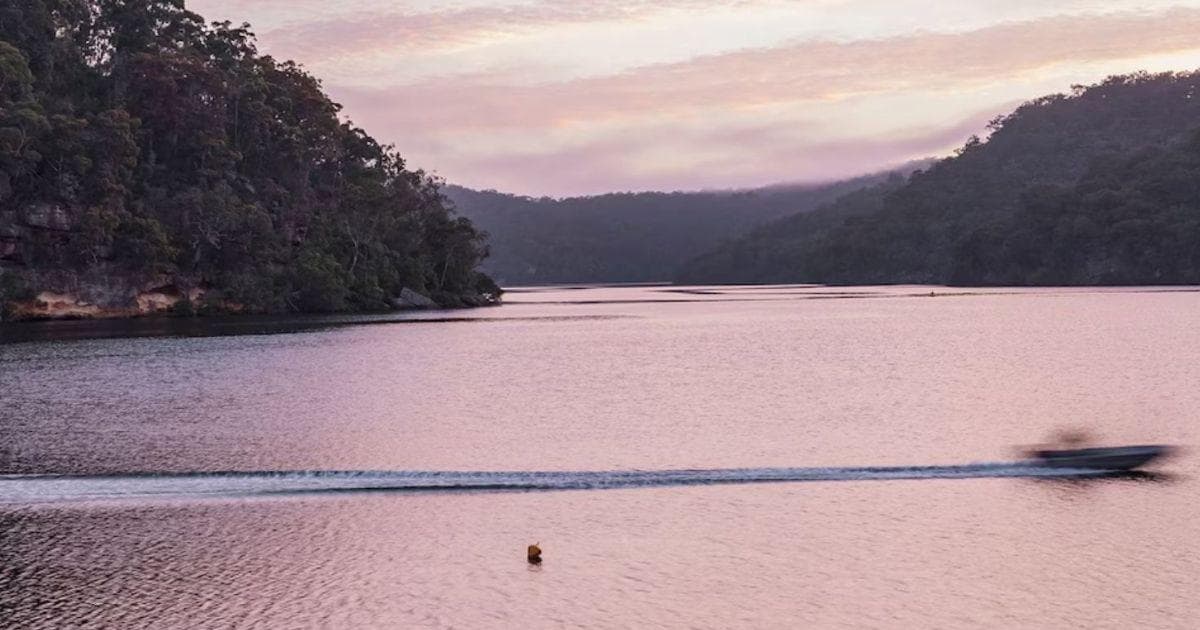
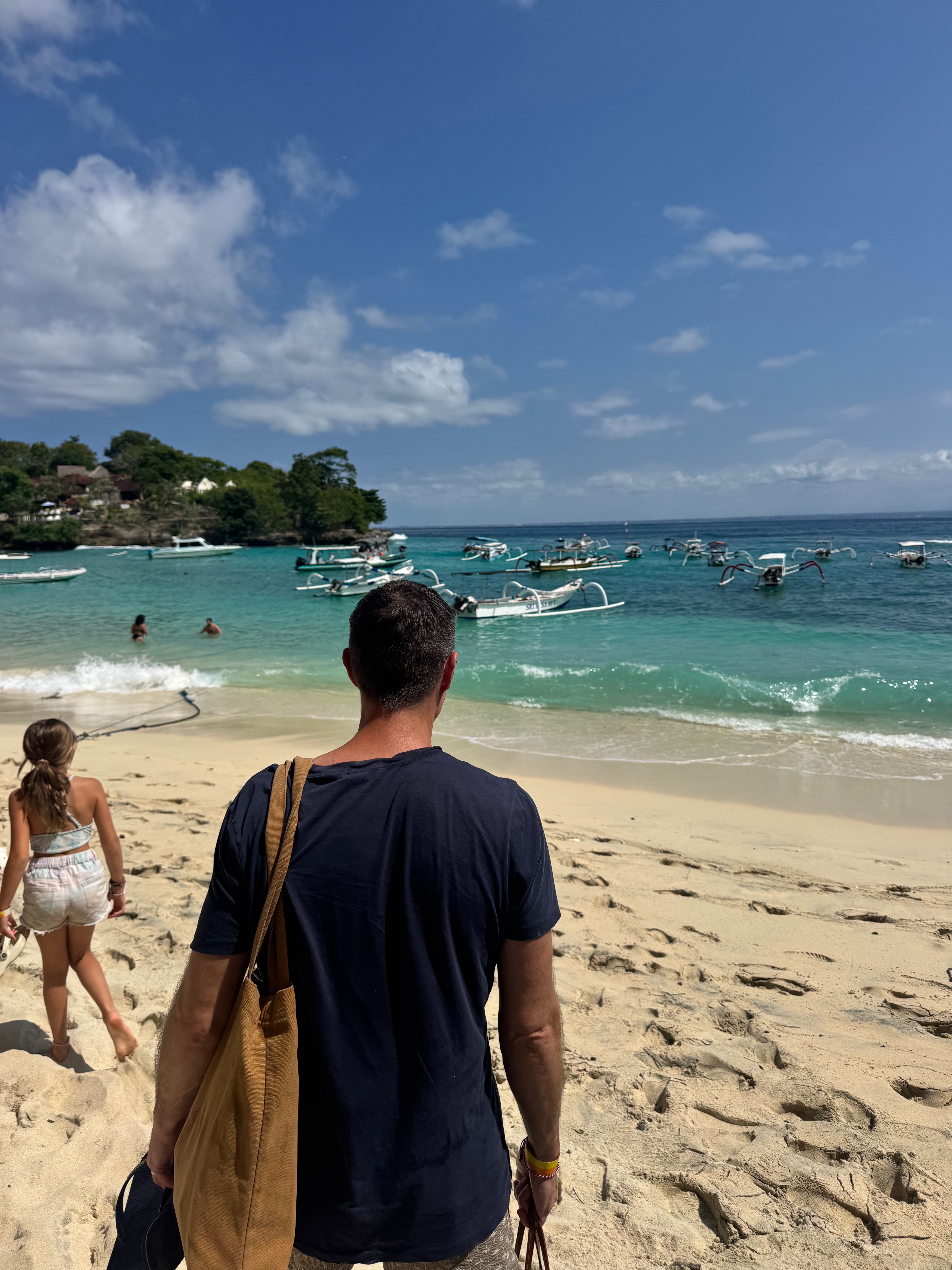
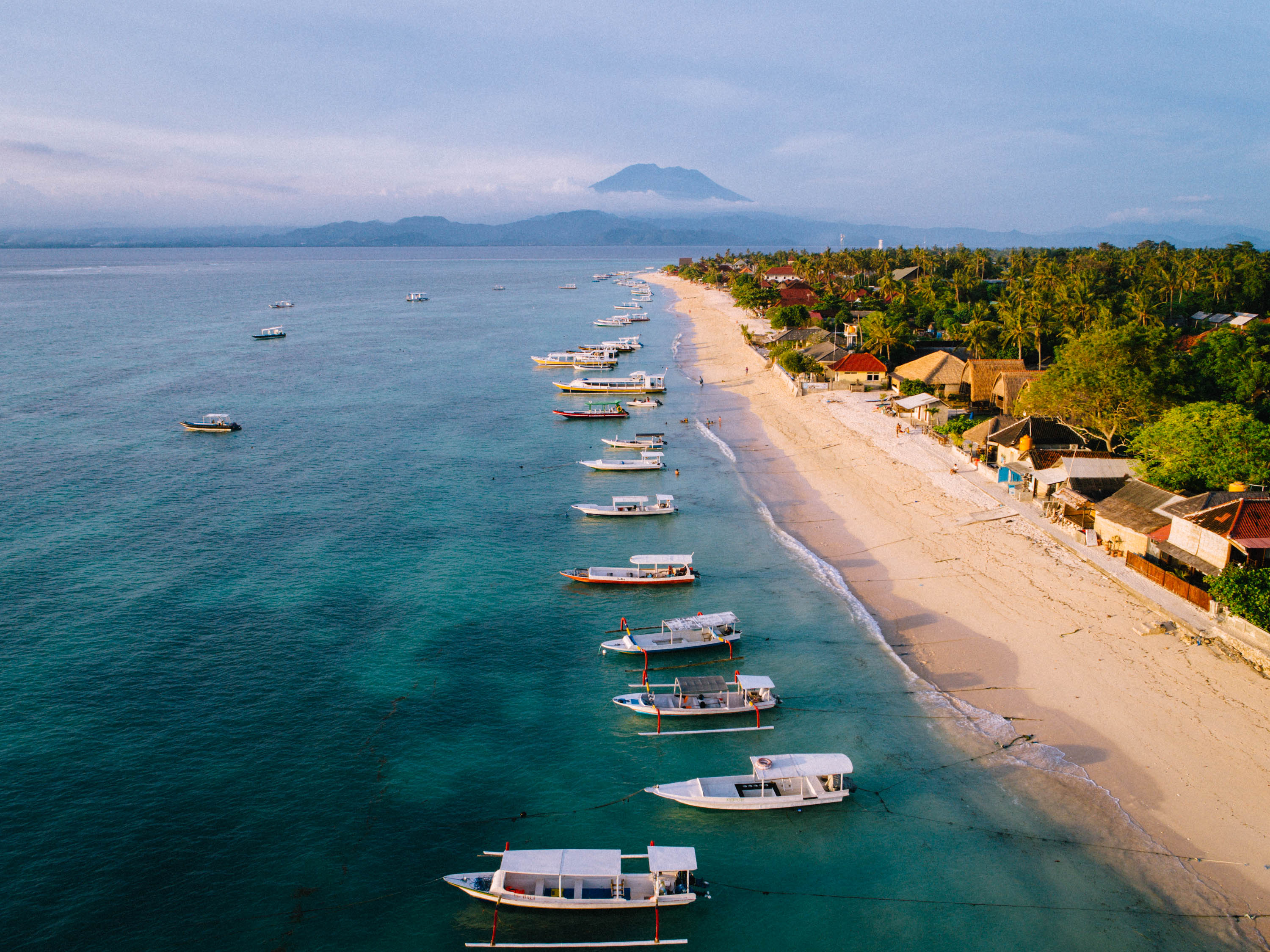
Our Rocky Fast Cruise departs Sanur at noon. The channel crossing takes thirty minutes of air-conditioned comfort in the lower cabin. I keep standing to steal glances out of the sea-spattered windows above us, the water shifting from grey-green to the kind of blue that doesn't look real — a saturated, almost electric turquoise that makes you reach for your phone to capture it even before you've arrived. The island appears slowly: limestone cliffs, coconut palms, a thin white line of beach. It looks like somewhere you'd find on a very optimistic screen saver.
Lulu spots three dogs on the beach upon arrival. We move quickly.
Villa Tranquilla
The name is doing a great deal of work, and it earns every syllable.
We are collected from the dock in an oversized buggy with padded seats in the back and driven up into Sandy Bay, through narrow lanes where high stone walls conceal whatever lives behind them. Ours is a grey wooden door, fairly unremarkable from the outside. Putu, the villa manager, is waiting to welcome us — warm, efficient, quietly amused by the general chaos of our arrival. We step through the door and the world opens.
The entrance path is lined with marigold offerings and pandan trees forming a loose canopy overhead. Frangipani petals fall softly as we walk.
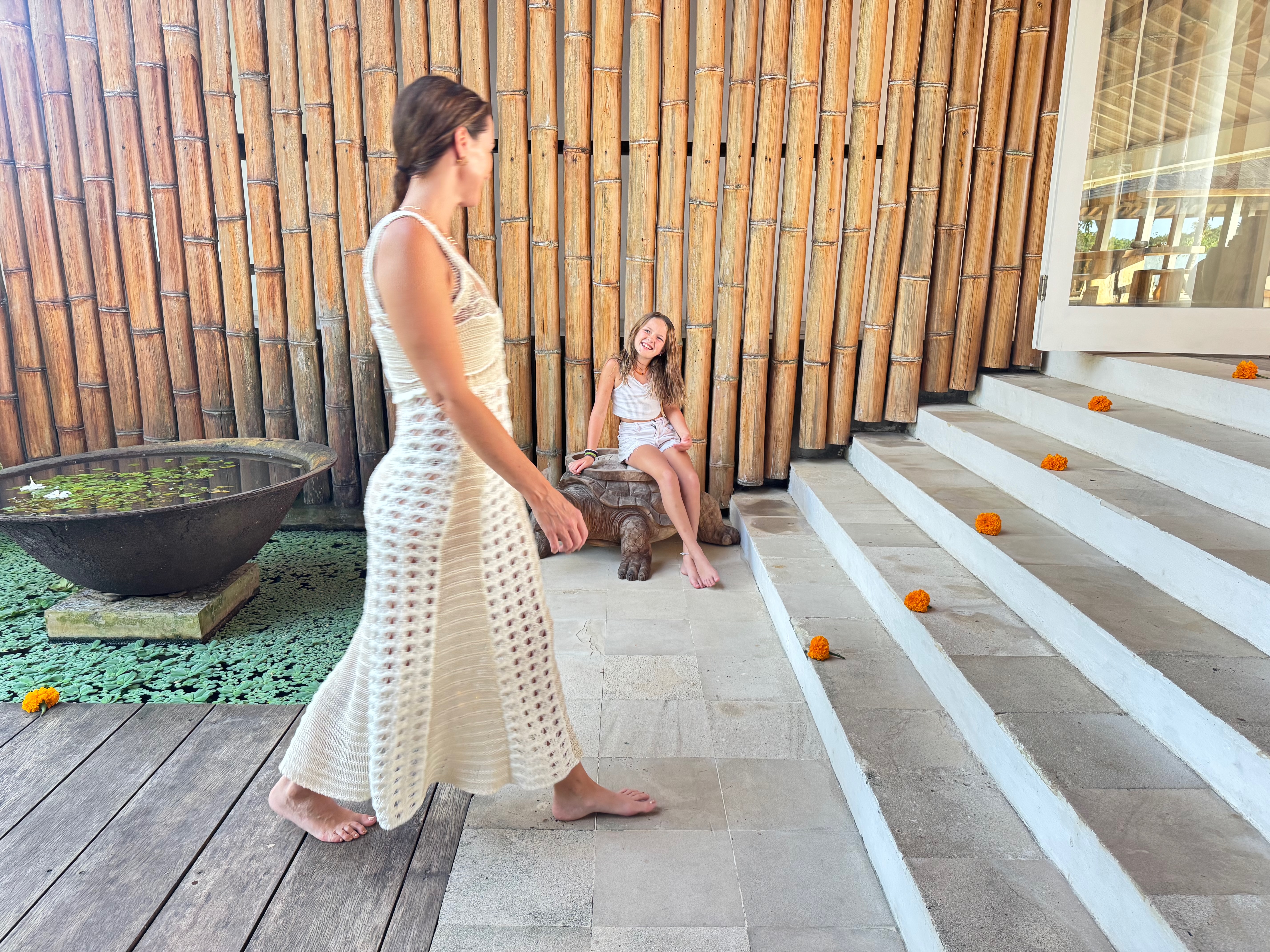
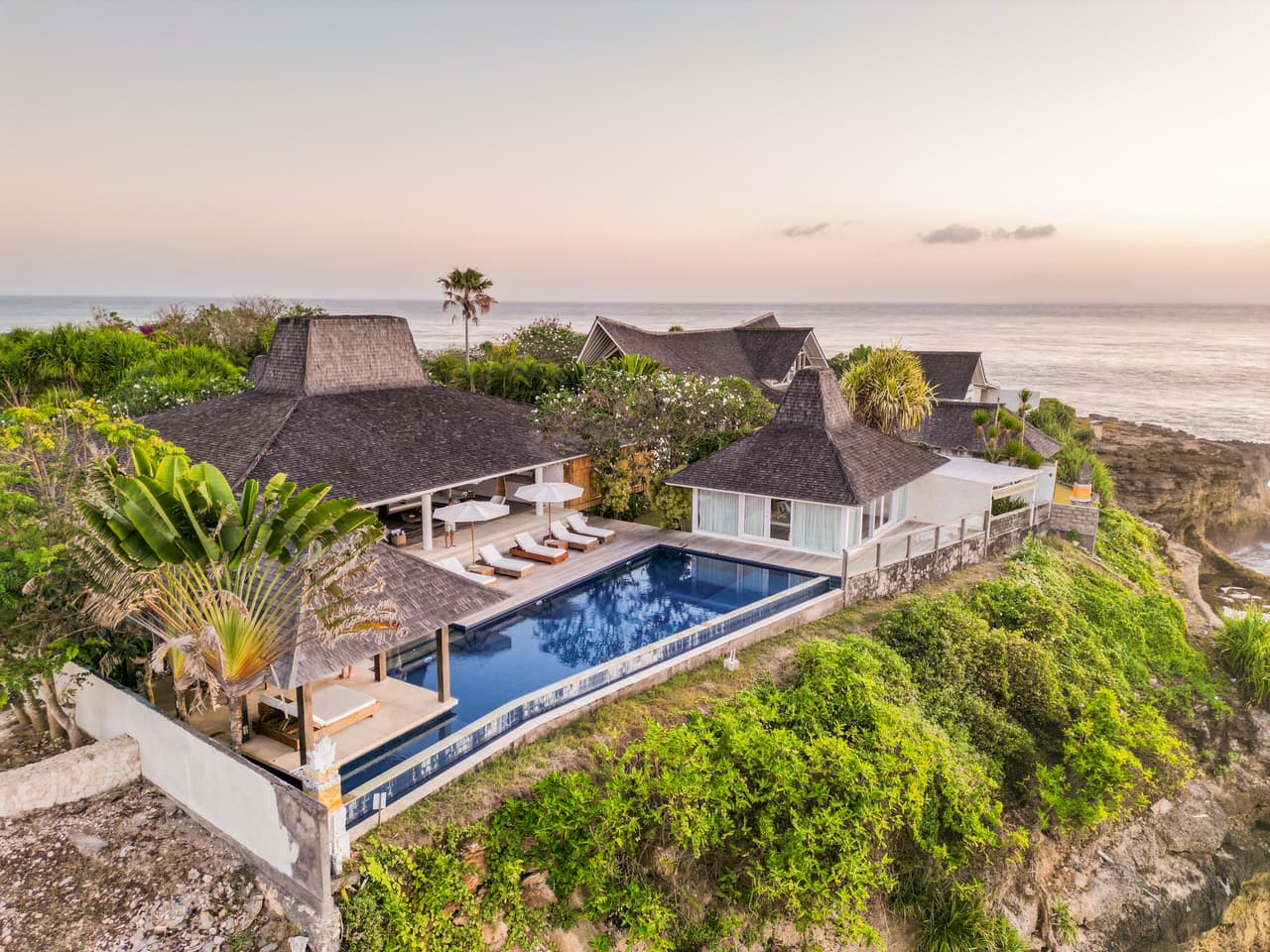
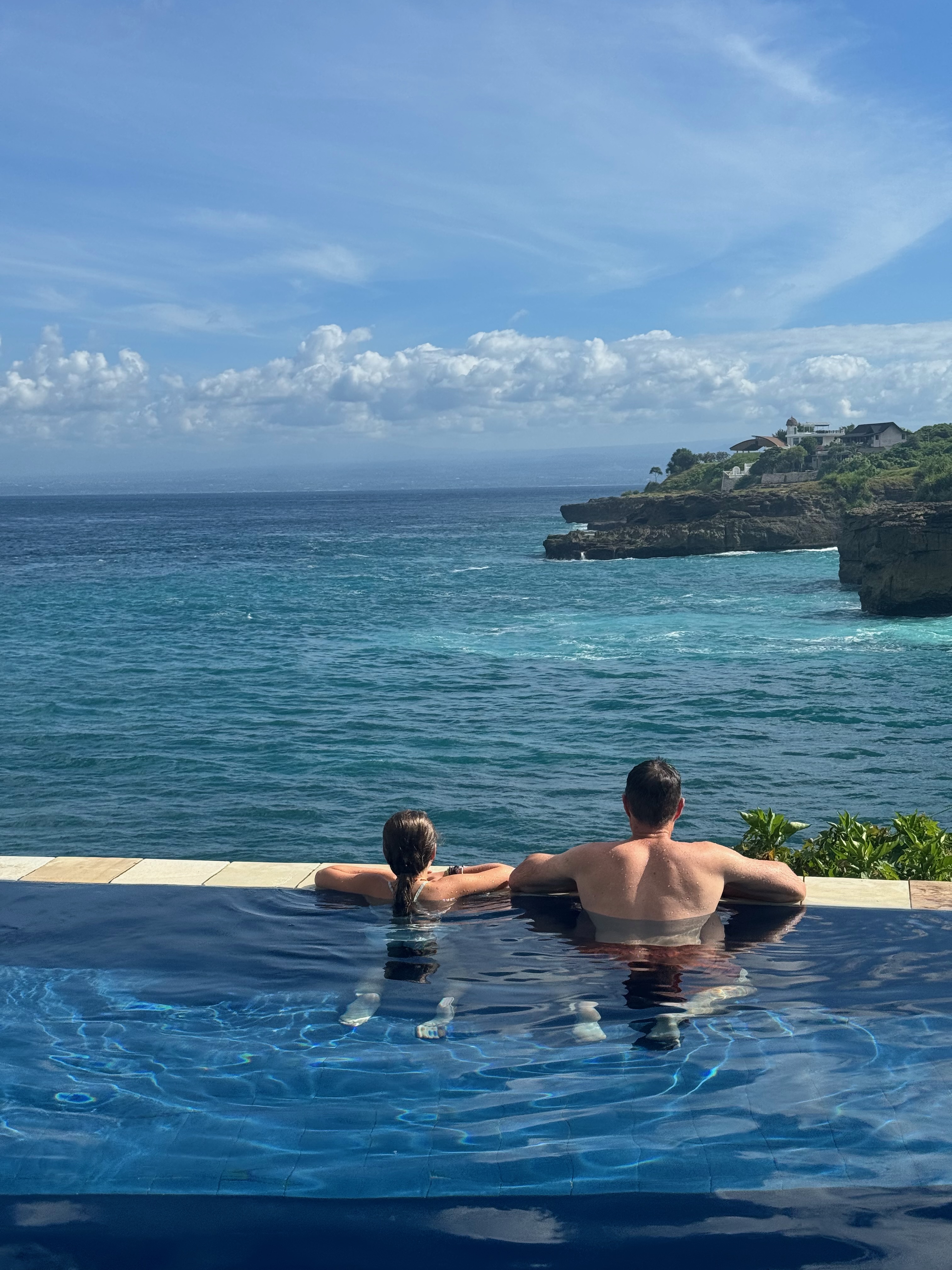
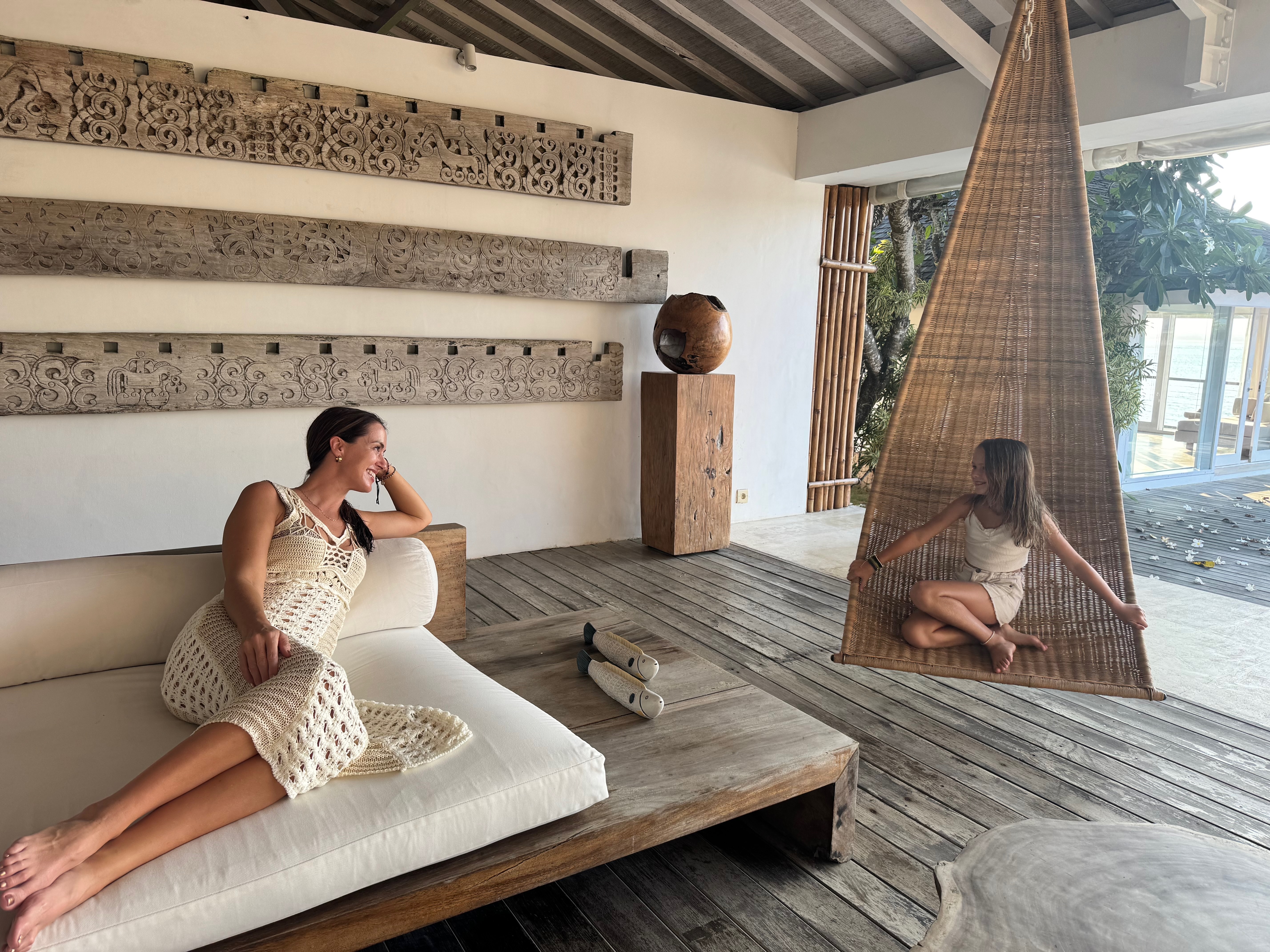
Behind the bamboo-screened entrance, the villa unfolds into a vast outdoor living space: an enormous white daybed-sofa, beautifully carved timber table and bench seats, an open kitchen with beaded light fixtures, and beyond it all — the infinity pool, the Indian Ocean, the cliffs, the sky.
The view is a 180-degree sweep across Teluk Uwung Bay. The water below is that same impossible blue. On the rocky headland to the right, another villa perches on the cliff edge like something from a film set. The sound, when you stop talking, is the Indian Ocean crashing against the limestone below, over and over, rhythmic and enormous and completely indifferent to anything you brought here to worry about.
The sound, when you stop talking, is the Indian Ocean crashing against the limestone below, over and over, rhythmic and enormous and completely indifferent to anything you brought here to worry about.
Damien and I stand there for a moment, not saying anything. The teenager puts his phone in his backpack. It stays there for the rest of the afternoon.
The Villa, in Detail
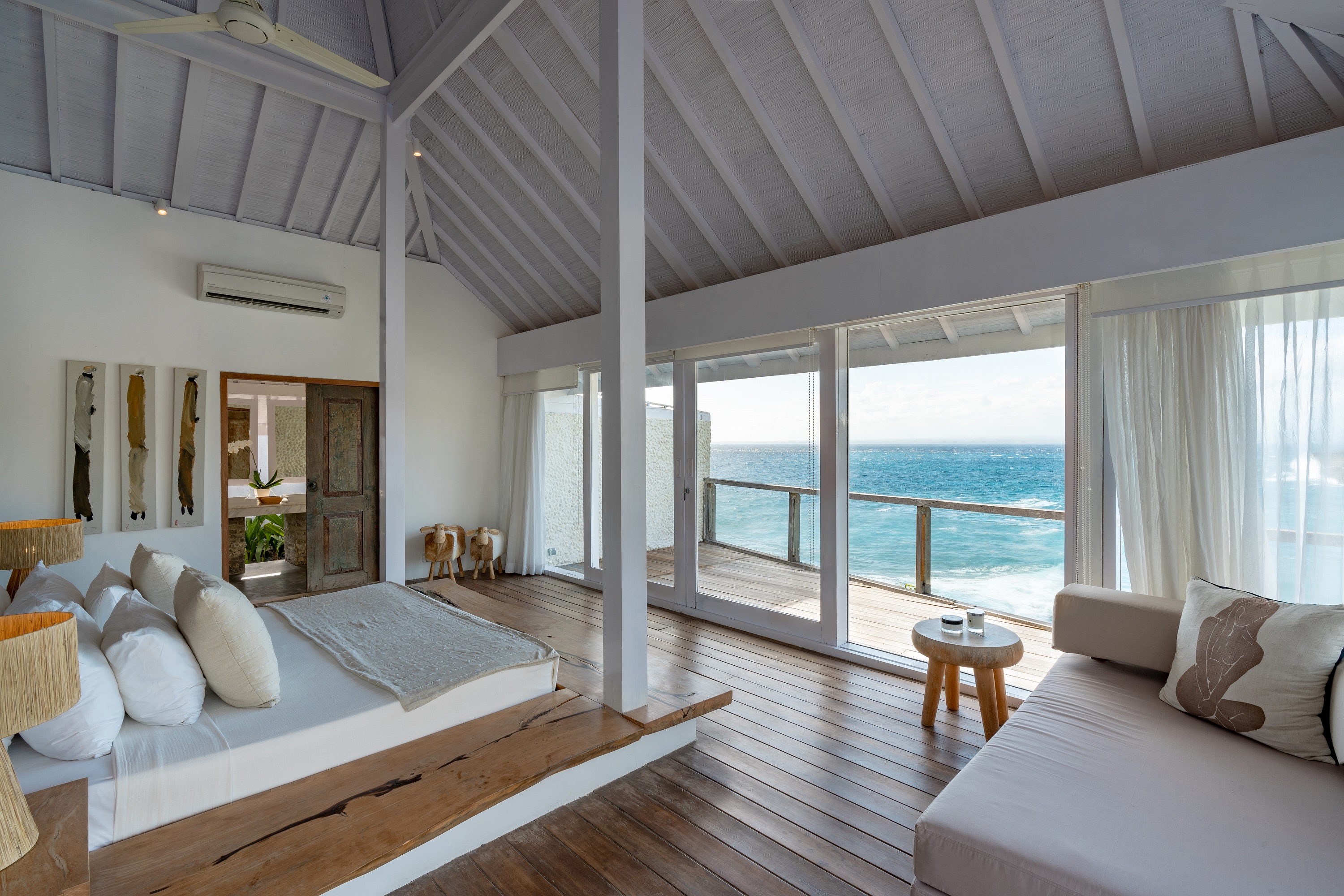
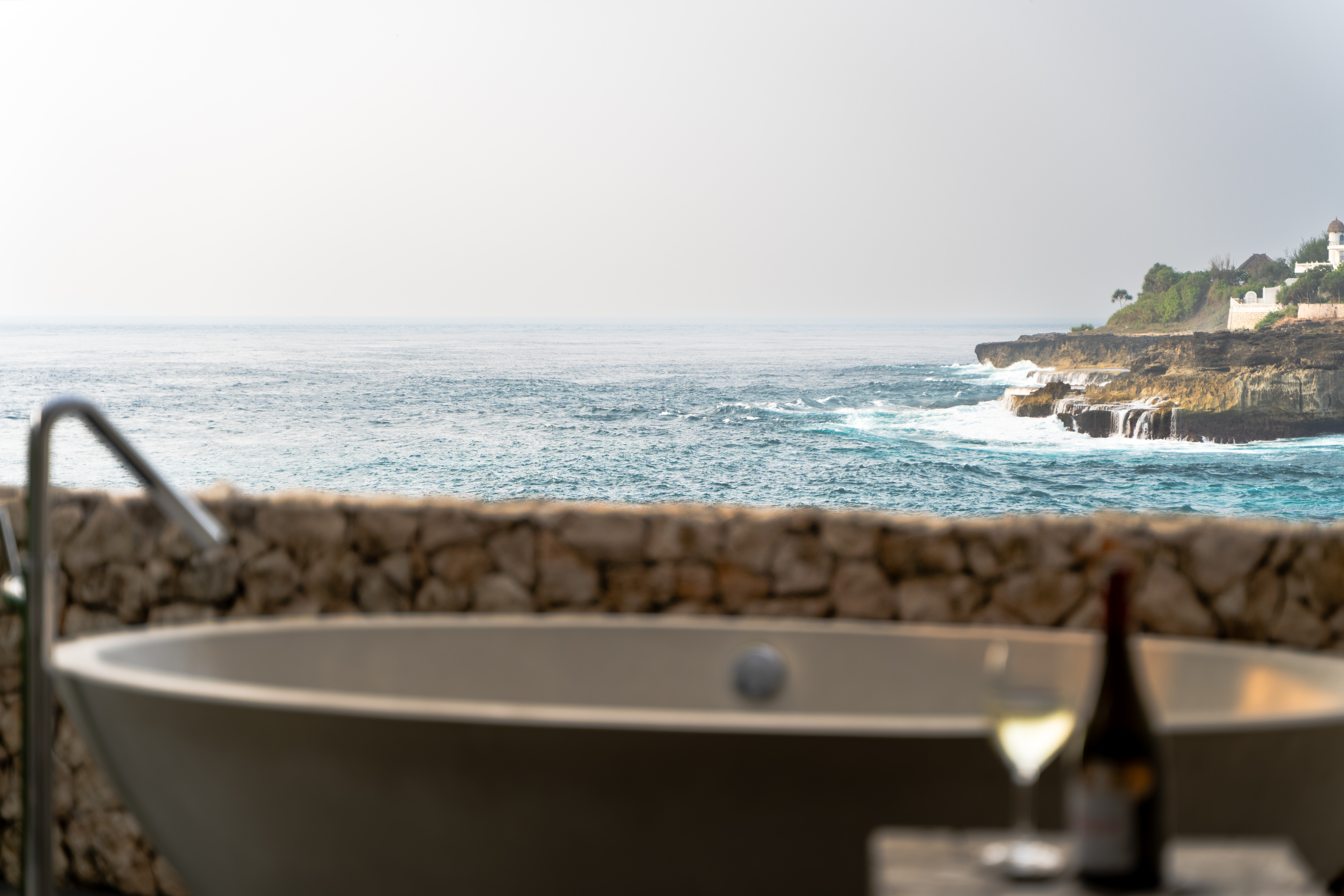
Villa Tranquilla is a four-bedroom clifftop property managed by The Lembongan Traveller, Nusa Lembongan's most trusted local experts. It is, without equivocation, one of the most breathtaking and considered private villas I have ever stayed in. Every detail has been thought through — the marigolds and canang sari offerings placed freshly along pathways each evening, the frangipani blooms left on bedsides, the outdoor bathrooms that open onto tropical gardens where you shower with nothing between you and the sound of the ocean.
I cannot overstate the outdoor bathrooms. Showering among vibrant tropical foliage with the sea breeze moving through and waves audible below is not something I was prepared for. I stood there considerably longer than necessary. Multiple times.
The villa sleeps eight across four bedrooms, making it ideal for families or two couples travelling together. There is a separate family suite at the rear with a king bed and bunk beds, while the master bedroom faces the ocean with what I can only describe as a view that makes you rethink your entire domestic situation. Every bedroom opens onto its own outdoor bathroom.
The staff of five — Putu managing the villa, Nyoman and Wayan on housekeeping, Ibu Putu in the kitchen, and Ketut on security — retreat discreetly when not needed and reappear when you didn't know you needed them. It's our first experience of anything resembling staff-villa living, and the adjustment takes about forty minutes. By the second morning, I'm greeting Putu in the kitchen as if she's been part of our family for years.
Which brings me to breakfast. Each evening, you choose from the menu for the following morning. Ibu Putu has the kitchen to herself in the early hours and by the time we appear, tropical fruit is carved into shapes on the table — mango, papaya, dragon fruit arranged with a precision I have never managed at home — alongside strong Balinese coffee, pancakes for Lulu, an egg white omelette for me, and a proper Indonesian breakfast if you want it. Nasi goreng, sweet potato fritters, the whole thing. We eat outside, every morning, barefoot, watching the sea.
One evening we opt for in-villa dinner. Ibu Putu cooks a full Indonesian spread — nasi goreng, mie goreng, crispy chicken, gado gado — served buffet-style at the carved table while geckos call from the garden walls. Lulu, who treats anything unfamiliar on a plate with deep suspicion, tastes the chicken. Then the nasi goreng. Then asks for more. I say nothing. I do not want to break the spell.
The White Lie That Worked (For A While)
We tell my son, upon arrival, that the villa charges extra for the television in the media room. This is not strictly true. He figures it out within twenty-four hours, but by then it is too late: he has discovered the outdoor couch, the pool, the Cokes in the minibar (we tell him those belong to the staff — another small fiction of necessity), and the general impossibility of being in a bad mood somewhere that looks like this.
By day two, he is swimming every morning before breakfast. He volunteers to help Putu carry things. He sits with us at sunset without being asked. I am not taking credit for this. I am giving credit entirely to Nusa Lembongan.
The Island Itself
Nusa Lembongan is eight square kilometres. There are no traffic lights. Transport is by oversized buggy (around 150,000 IDR per trip, approximately $15 AUD, though many restaurants offer complimentary transfers), scooter, bicycle or, if you are brave and the roads cooperate, on foot. The island is connected to the tiny Nusa Ceningan by the famous Yellow Bridge — wide enough for two motorbikes and one large argument — from which you can look down at the seaweed farmers working the shallows below, the same families who have harvested here for generations.
The water here is the thing people don't quite believe until they see it. It's not the murky green of Sydney beaches, not the flat postcard blue of the Maldives. It's a layered, moving, luminous turquoise that changes shade by the hour. Floating in the villa pool with nothing between you and the open ocean, watching the colour shift from aquamarine at noon to deep teal by afternoon, is the closest I have come to properly stopping in years.
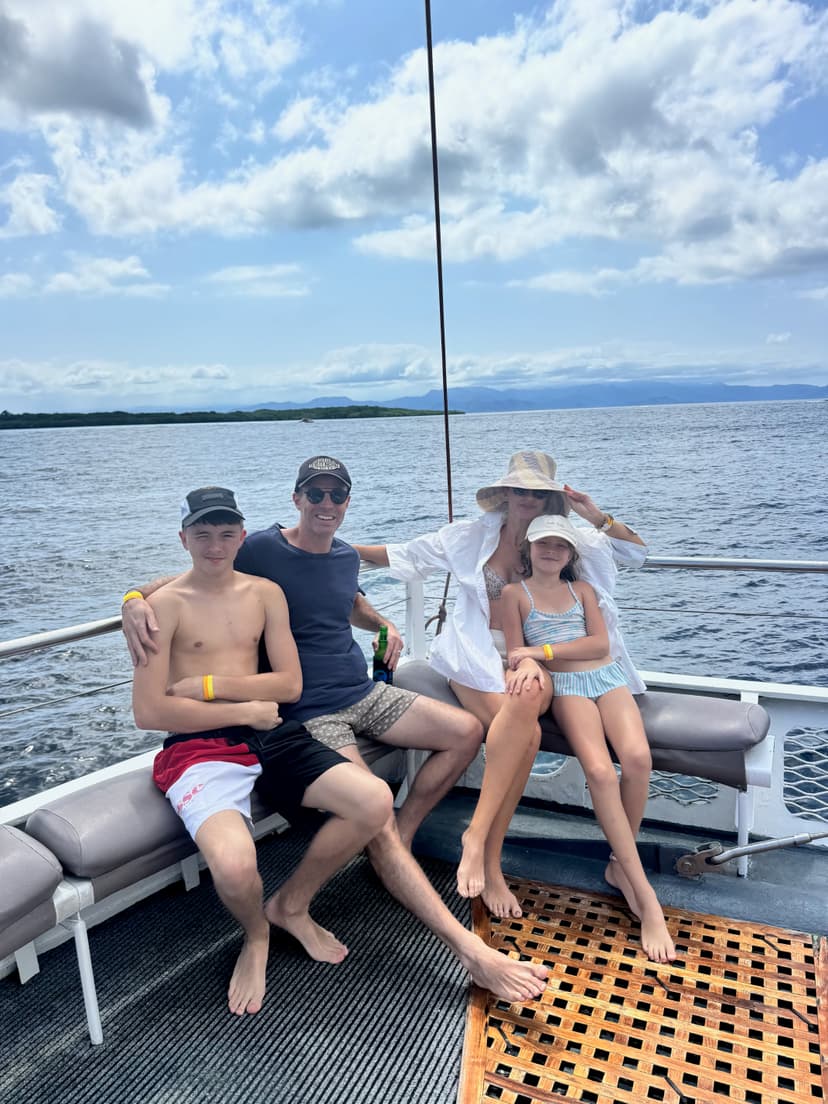
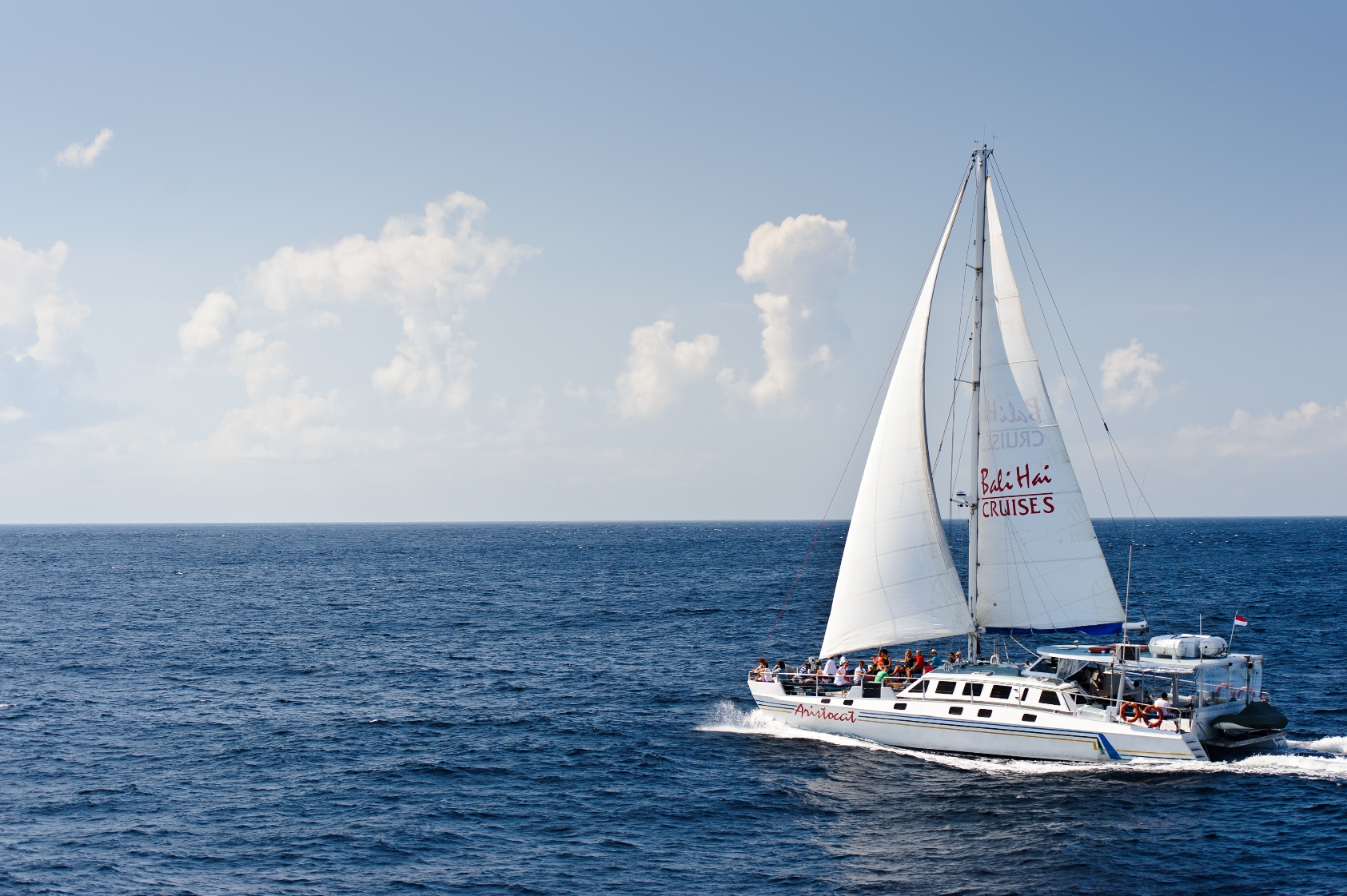
We take the Bali Hai Island Discovery Cruise on our second day — a full-day catamaran trip that includes snorkelling, island exploration and a lunch spread so extravagant it borders on the theatrical: fruit sculptures, flower arrangements, prawn skewers, mini sliders, all laid out on a blue-clothed table on the open deck while the ocean moves around you. We snorkel over coral gardens, floating lazily on the tide in our life jackets watching tiny blue damselfish darting in iridescent flashes through the reef, and a lone trumpetfish. Improbably long, the colour of old gold, with a snout like a medieval instrument, I watch him hovering beside a coral wall as though he has nowhere better to be. After lunch Damien and I sit on the bow in the sun and talk in a way that requires no agenda.
Spring Spa
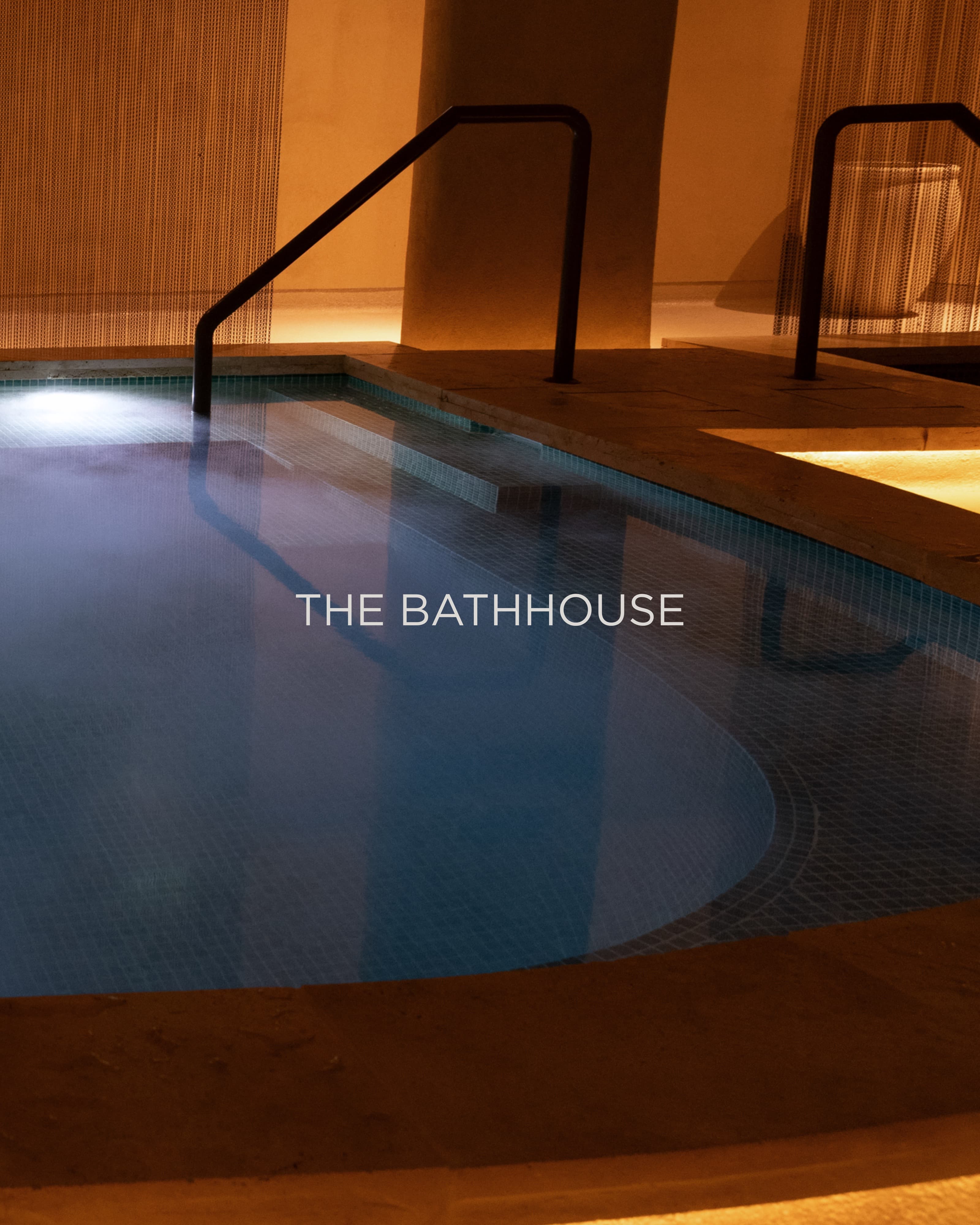
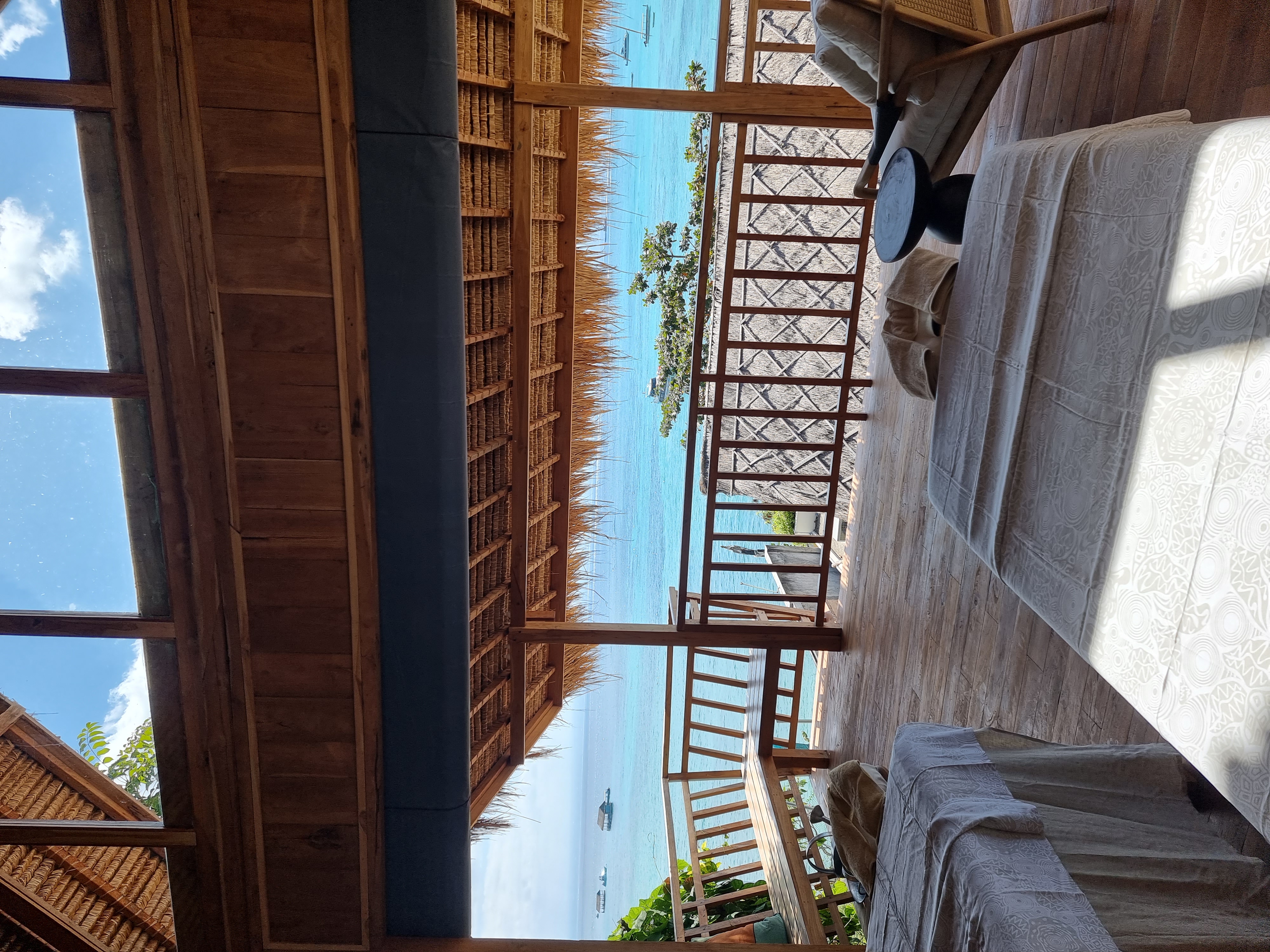
One afternoon I slip away on my own. Spring Spa is a short walk along the clifftop path past Bar Riva, and Arini, my therapist, has the gentlest hands and a calm that makes you go quiet the moment you lie down. The treatment villas are open to the sea, built from recycled teak and Lembongan stone, with nothing between you and the breeze. I have the Flow and Balance Ritual, ninety minutes of massage and then a rose quartz gua sha facial, while a gecko calls somewhere in the garden.
Spring has spas across Bali and into New Zealand. This one, on the cliff, is the jewel. But the detail I keep telling people about is smaller than all of that. There is a little mirror set beneath the face hole, angled so that when you look down you see the ocean. I watch the sun melt into the tree canopy while someone presses cool stone along my jaw. A hotel treatment room could never.
Sandy Bay Beach Club and Beyond
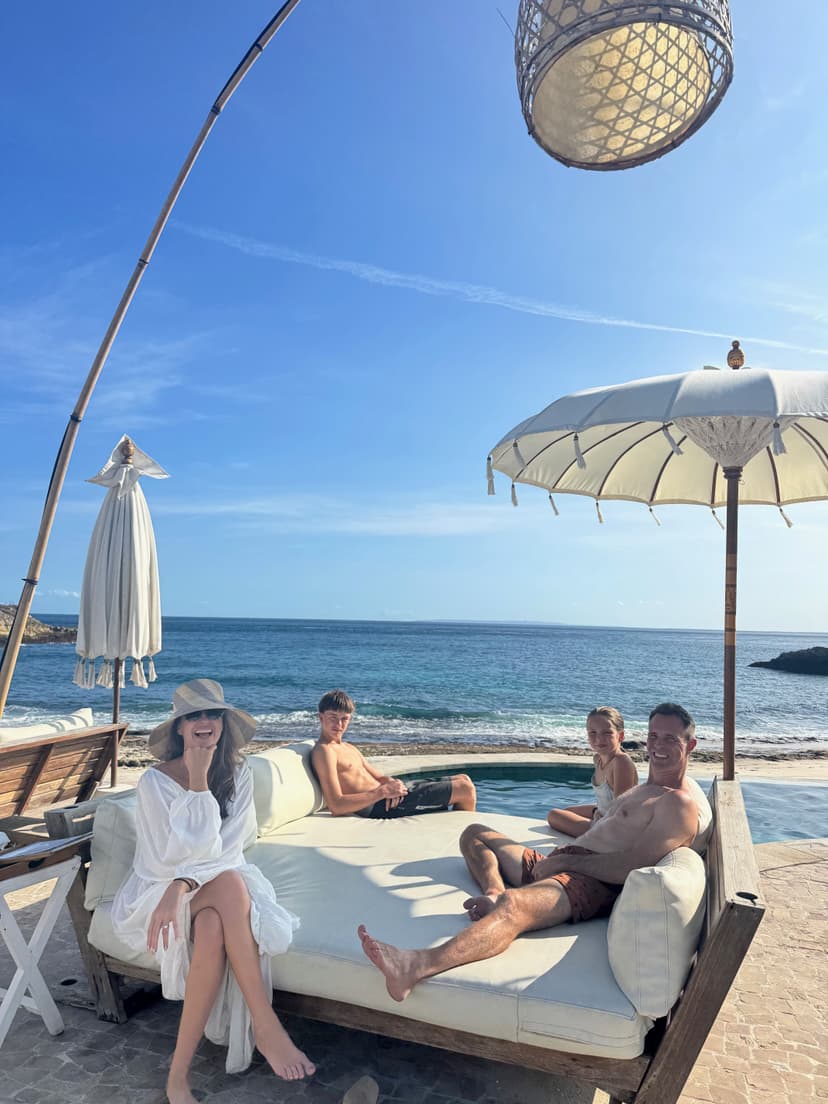
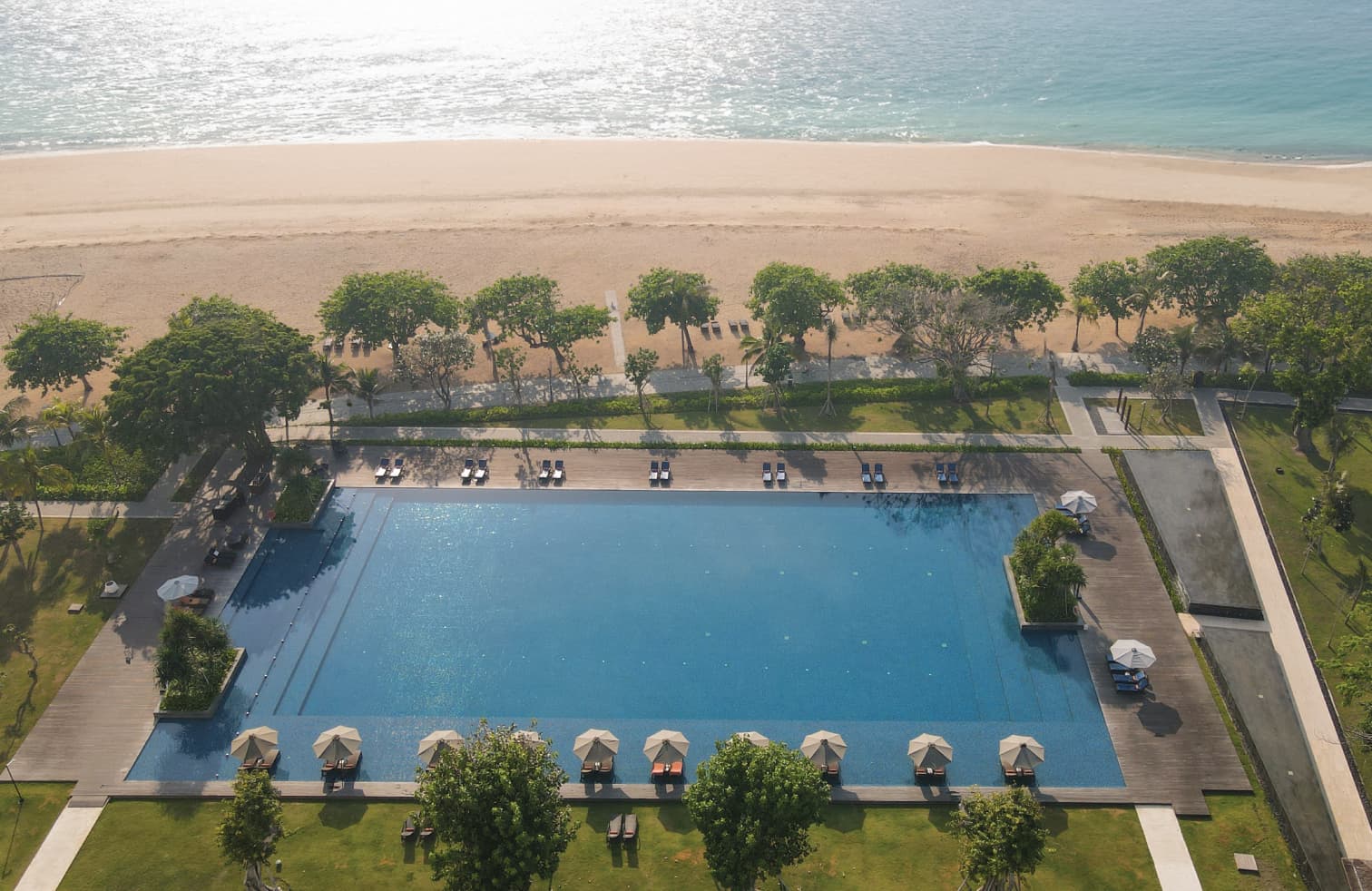
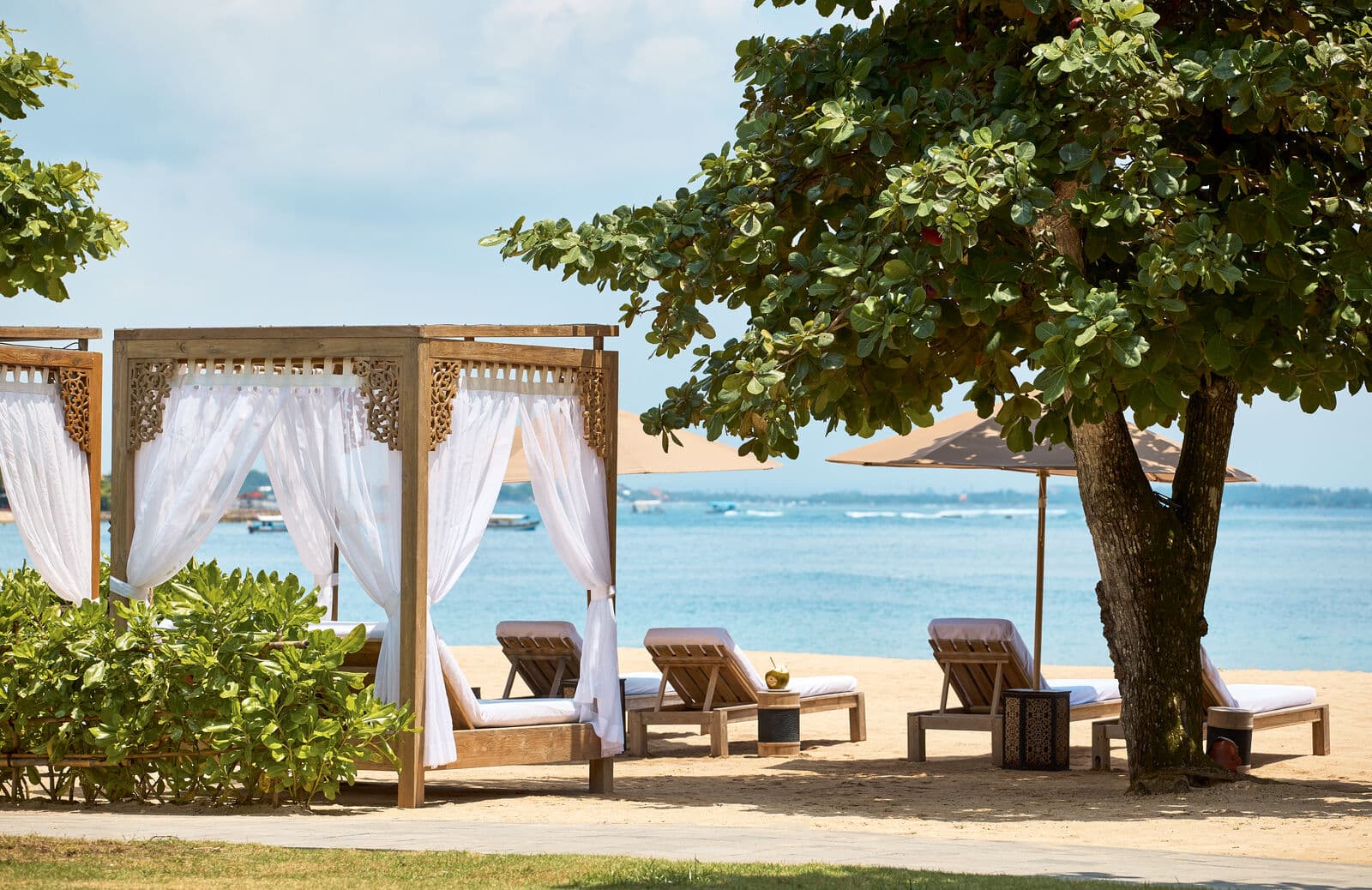
Sandy Bay Beach Club, a short walk from the villa, is our local. White and blue tones, a deep infinity pool overlooking the rocky bay, Balinese parasols with tassels, a kids' zone, excellent coffee and a menu that runs from light bites to proper meals. The vibe is laid-back but chic — think Ibiza if Ibiza had better manners and more frangipani. We visit twice in two days without feeling we've exhausted it.
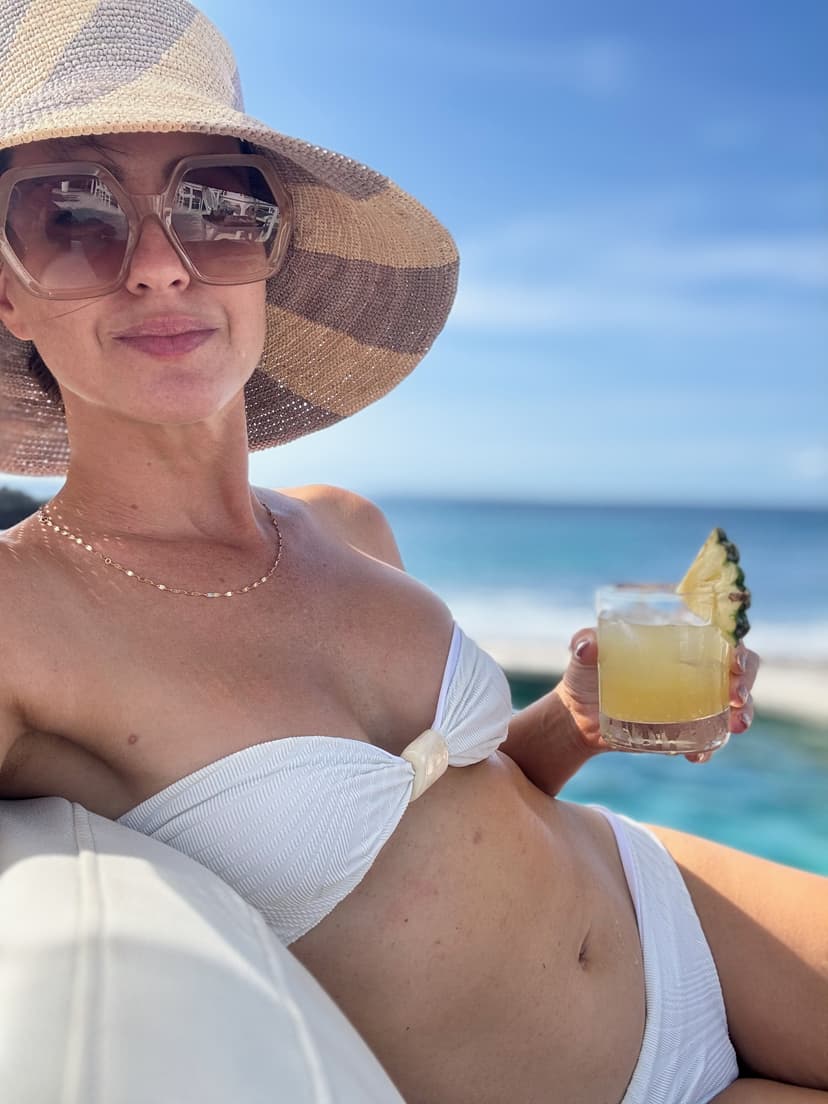
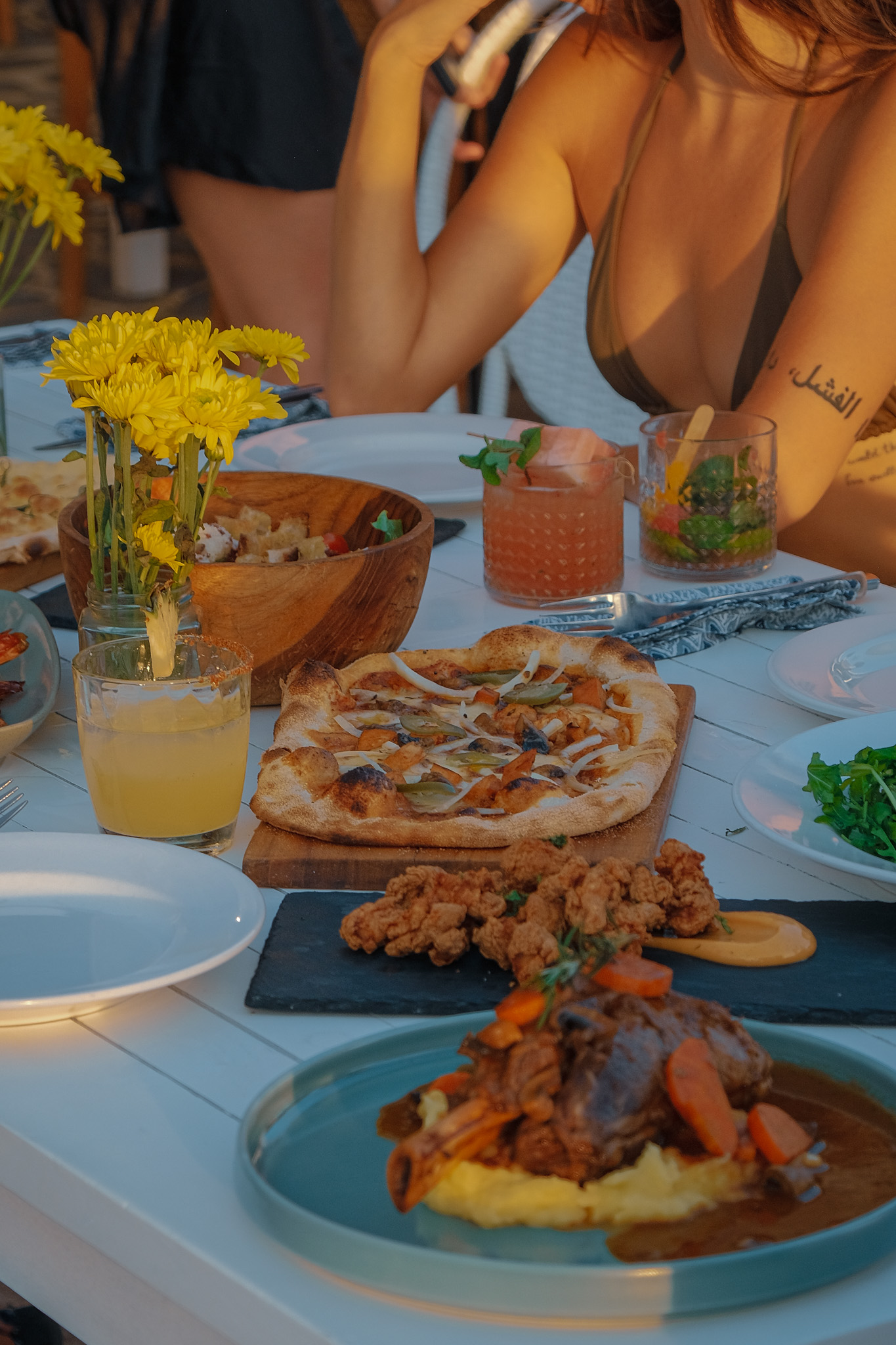
For dinner one evening, Bar Riva — a Mediterranean-inspired beachfront restaurant on the Jungut Batu waterfront that has somehow brought the Amalfi Coast to a small Indonesian island — is exactly what it sounds like and more. Handcrafted cocktails, Italian-inspired dishes made with local ingredients, the sea visible between the tables. We eat outside as the sun drops. Lulu spots a dog under the table at the next setting. We order quickly and pay the bill.
The Cat Compromise
On our last morning, Damo plays what turns out to be a masterstroke.
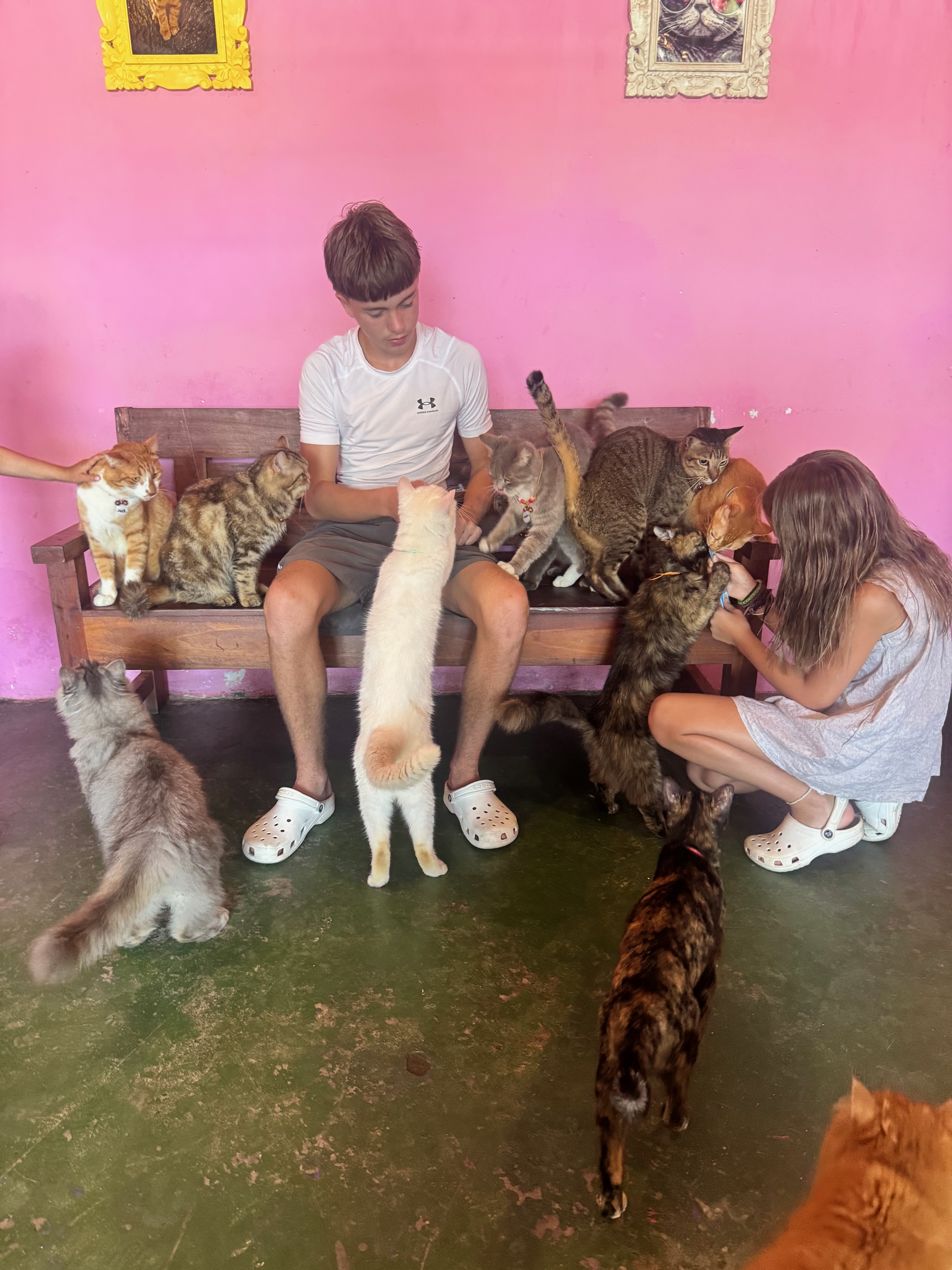
Cat Island is located above Gabet's Pub, the island's only Irish pub, which sits just before the Yellow Bridge and overlooks the seaweed farms. It is, as the name suggests, an island of cats. Not literally. A room, open-air but caged at the edges, overlooking the ocean, containing approximately forty to fifty rescued strays who have been fed and loved and are now aggressively affectionate with anyone who purchases a lickable cat treat at the door. Your entry ticket buys you access to a scene of considerable chaos: cats on your lap, cats on your shoulders, one extremely confident tabby attempting to sit on Max's head.
For children who have spent four days in Bali being told — repeatedly, firmly, with increasing desperation — that they cannot bring home any of the island's many, beautiful, abundant street dogs and cats, this is, I can confirm, extremely effective consolation. Lulu stayed for forty-five minutes. Max pretended he wasn't enjoying himself for four. It is absurd. It is underneath an Irish pub. We loved every minute.
The Last Evening
On our final night, I produce a bottle of Mumm that has been living at the bottom of my luggage since Sydney. We open it at sunset from the pavilion, the four of us sitting under the thatched roof as the sky turns gold and then coral behind the cliffs. The pool catches it all.
This is what I came here for. Not the villa, though the villa is extraordinary. Not the spa, or the catamaran, or the cocktails at Sandy Bay. The moment when the four of us are in the same place at the same time, undistracted, looking at the same thing.
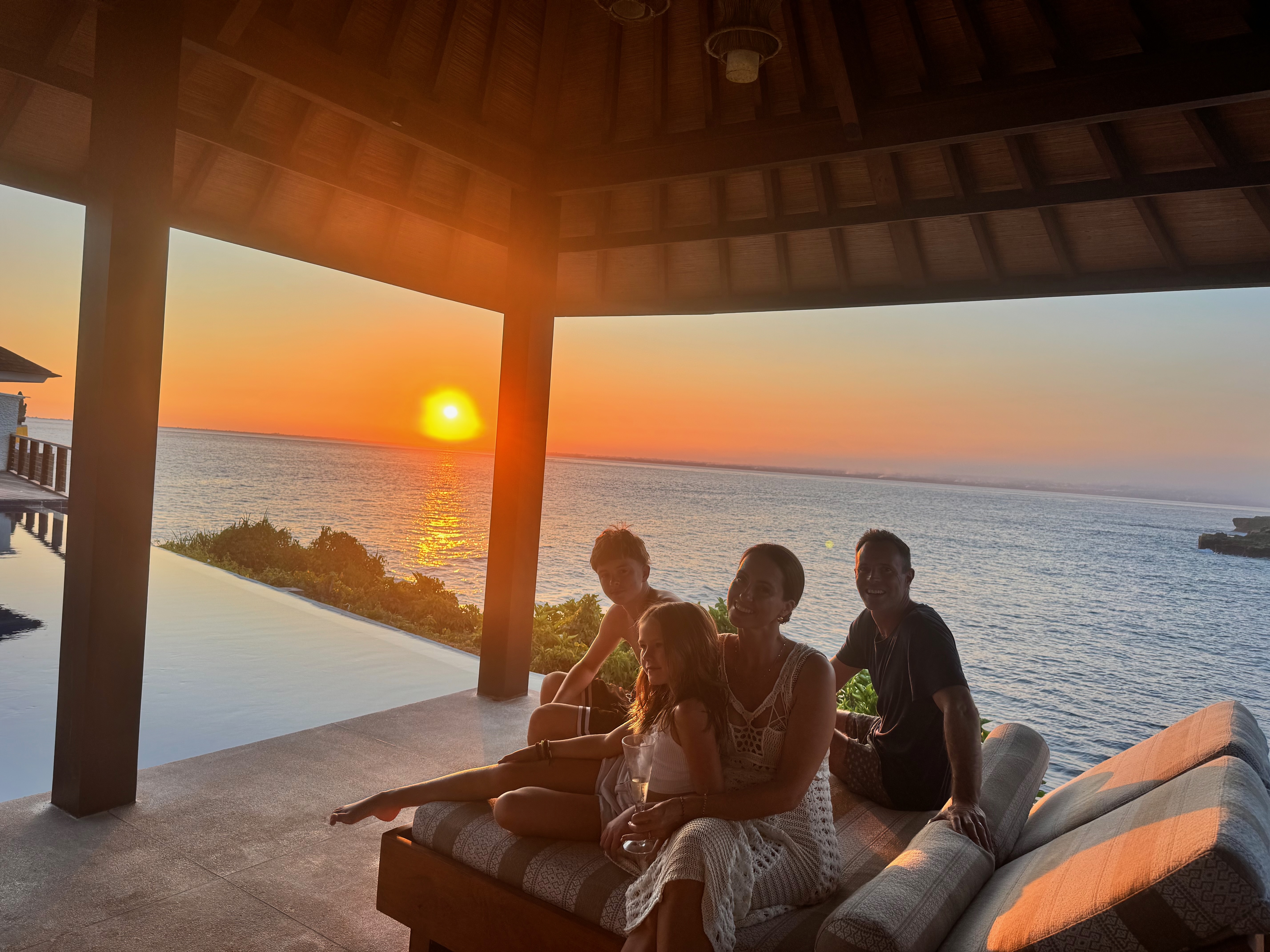
Bali offers so much that it can feel rude not to experience all of it. But I think the version of Bali I will return for — the version I now cannot imagine skipping — is this one. Thirty minutes offshore and a world away from everything. A place small enough that you can't lose your family, and beautiful enough that you stop wanting to. Lulu is already asking when we're coming back. Max says, offhand, that it was "actually pretty good."
High praise. We'll take it.
Almost everything we did here was booked through The Lembongan Traveller, the local team who manage Villa Tranquilla and seem to know every boat captain, beach club and back lane on the island. They book the villas and the crossings, point you towards the cruises and the spa, and know which restaurants will send a buggy for you. It is the kind of local knowledge you cannot Google. Rocky Fast Cruise transfers bookable at thelembongantraveller.com/rocky-fast-cruises.
Sigourney was hosted by The Lembongan Traveller at Villa Tranquilla, Nusa Lembongan.