
Sigourney recently travelled to Bali with her family, and after three days in the chaos of Canggu, found herself somewhere else entirely. This is her Sanur Bali hotel review: two nights at Bali Beach Hotel, The Heritage Collection, and The Meru Sanur, two of the most compelling places to stay in Bali right now. It is not the Bali you think you know.
Sanur is the quieter, more culturally intact alternative to Canggu and Seminyak — and it has quietly become one of the most sophisticated destinations in Bali, anchored by two extraordinary hotels: the heritage grandeur of Bali Beach Hotel, The Heritage Collection, and the dramatic new luxury of The Meru Sanur. If you want beauty, ease and genuine culture without the noise, this is where you go.
It seems that everyone goes to Canggu or Uluwatu and I get it — they're energetic and full of extraordinary food and great shopping. We did our first three days in Pererenan (next door to Canggu) with all the scooters, construction noise and beautiful chaos. By day three I was ready for a slower pace. Enter Sanur.
My friend Karlie, founder of Bali Buddies, knows how to do Bali well. She moved to Sanur a decade ago. "Everyone thought I was daggy living in Sanur," she told me, laughing. The clients were in Seminyak and Canggu. The scene was elsewhere. "Now everyone wants to live here."
Everyone thought I was daggy living in Sanur. Now everyone wants to live here.
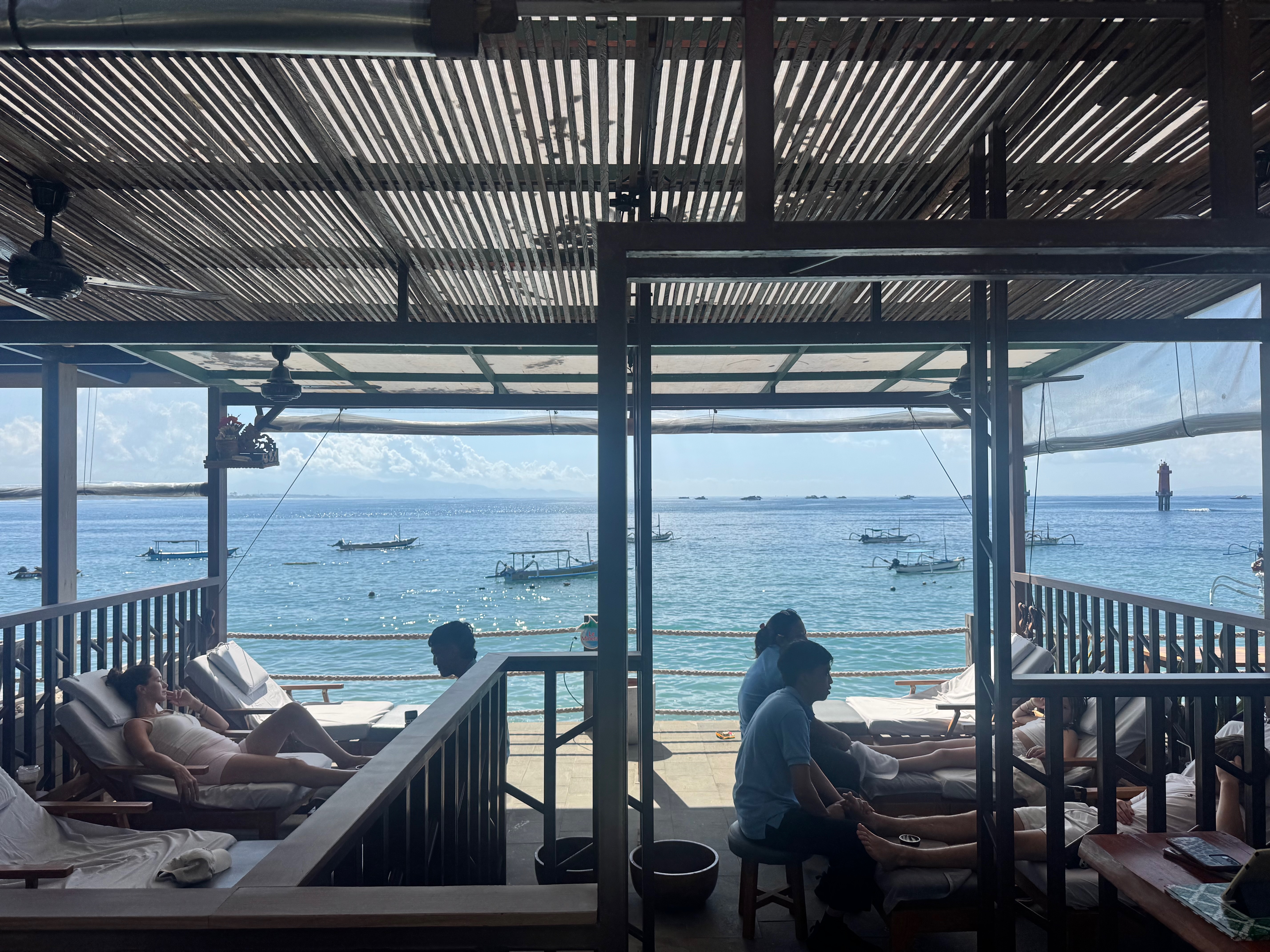
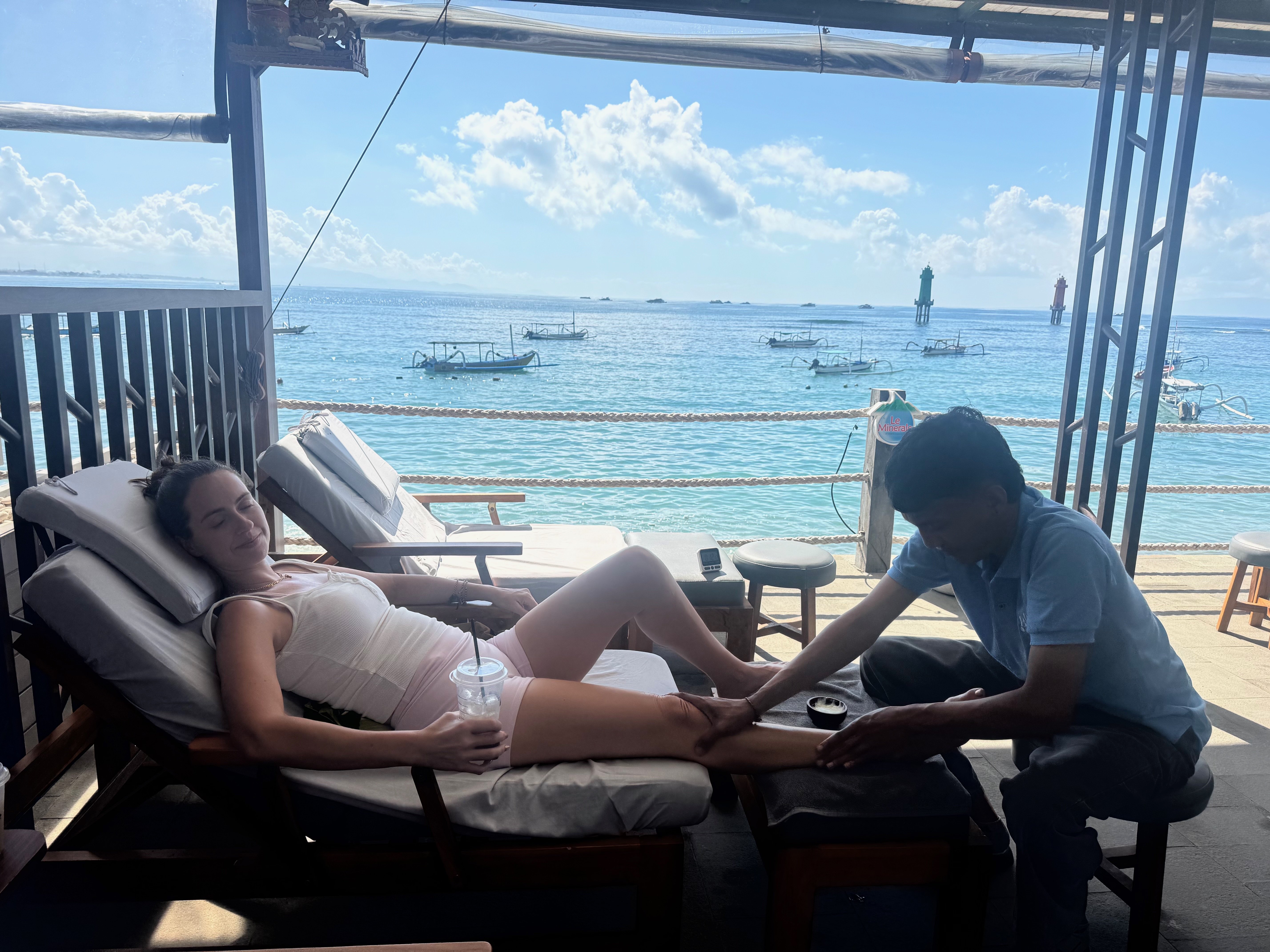
Foot massages for the family in Sanur.
She says the reason Canggu became Canggu — the nightclubs, the construction, the relentless churn of new development — is partly because the local landowners in that area were historically less prosperous, and when developers came knocking, they sold. The Sanur locals were already well-established, already protective of their community, and they simply said no to a great deal of what Canggu said yes to. No nightclubs. No high-rises. No overnight transformation into a party destination. What remains is a place where actual Balinese and Indonesian people live their actual lives, and visitors are woven gently through rather than overwhelming the place entirely.
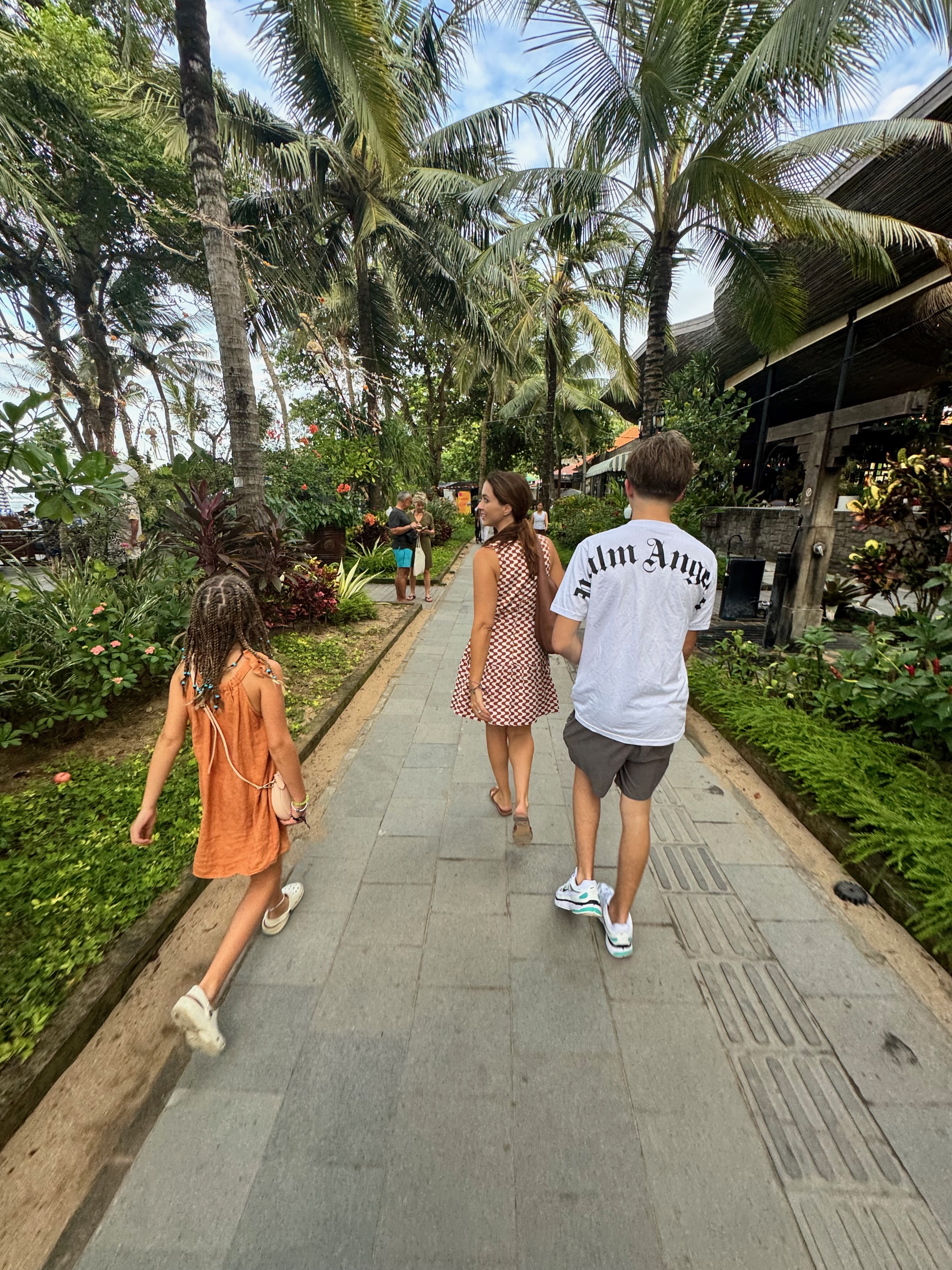
Exploring Sanur with the kids.
Add to this the fact that Sanur has no surf break — and therefore no surfer crowd, and therefore none of the scene that follows surfers from Legian to Seminyak to Canggu to Uluwatu in an endless migration — and you have an area that has, almost accidentally, remained itself. "It has a proper village vibe," Karlie said. "Nobody cares what you do or where you live. It is completely the opposite of Seminyak." She moved there for her children. She wanted them riding bikes along the beach path, not growing up in what she described, with admirable precision, as "the eastern suburbs of Bali."
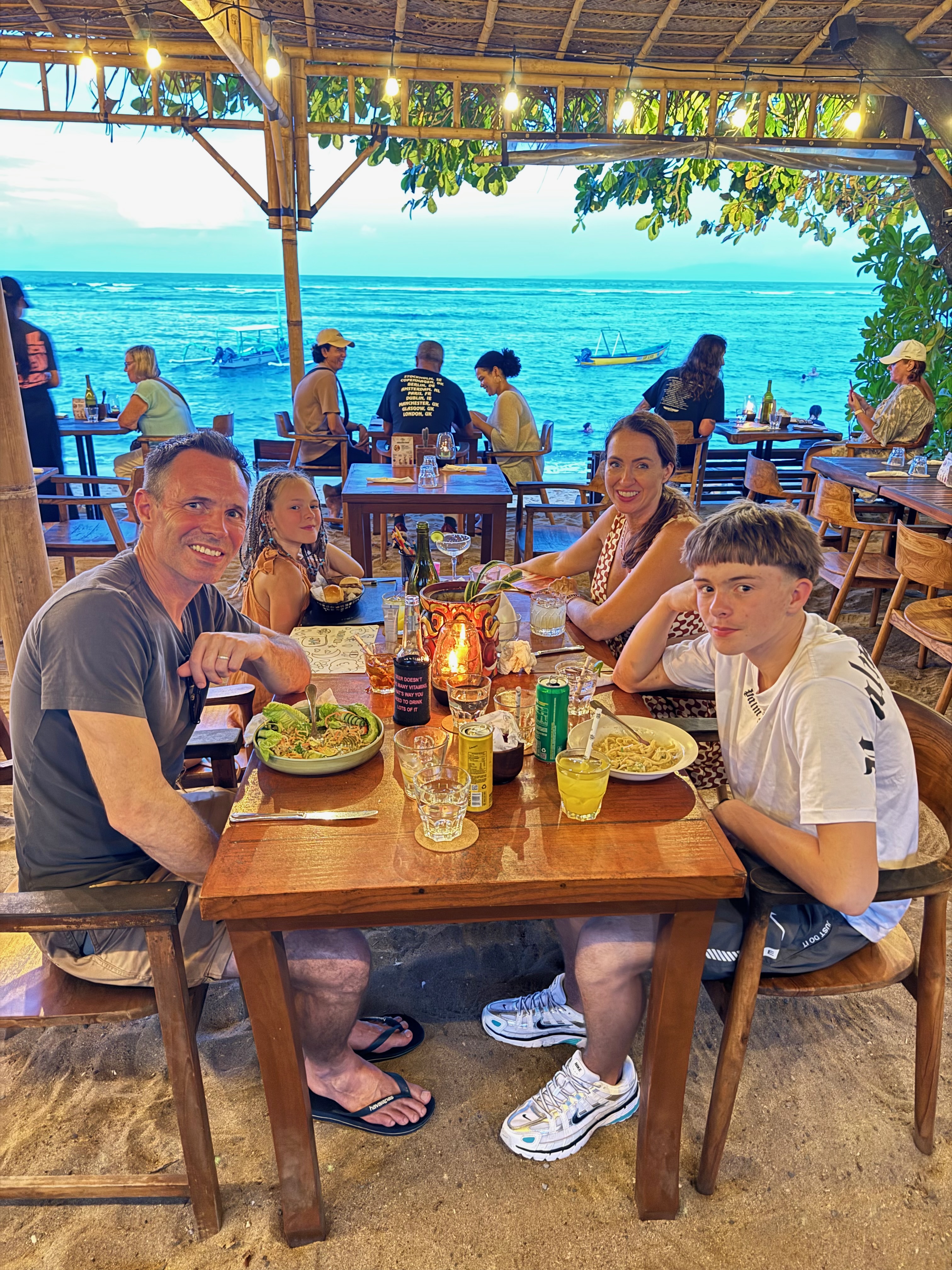
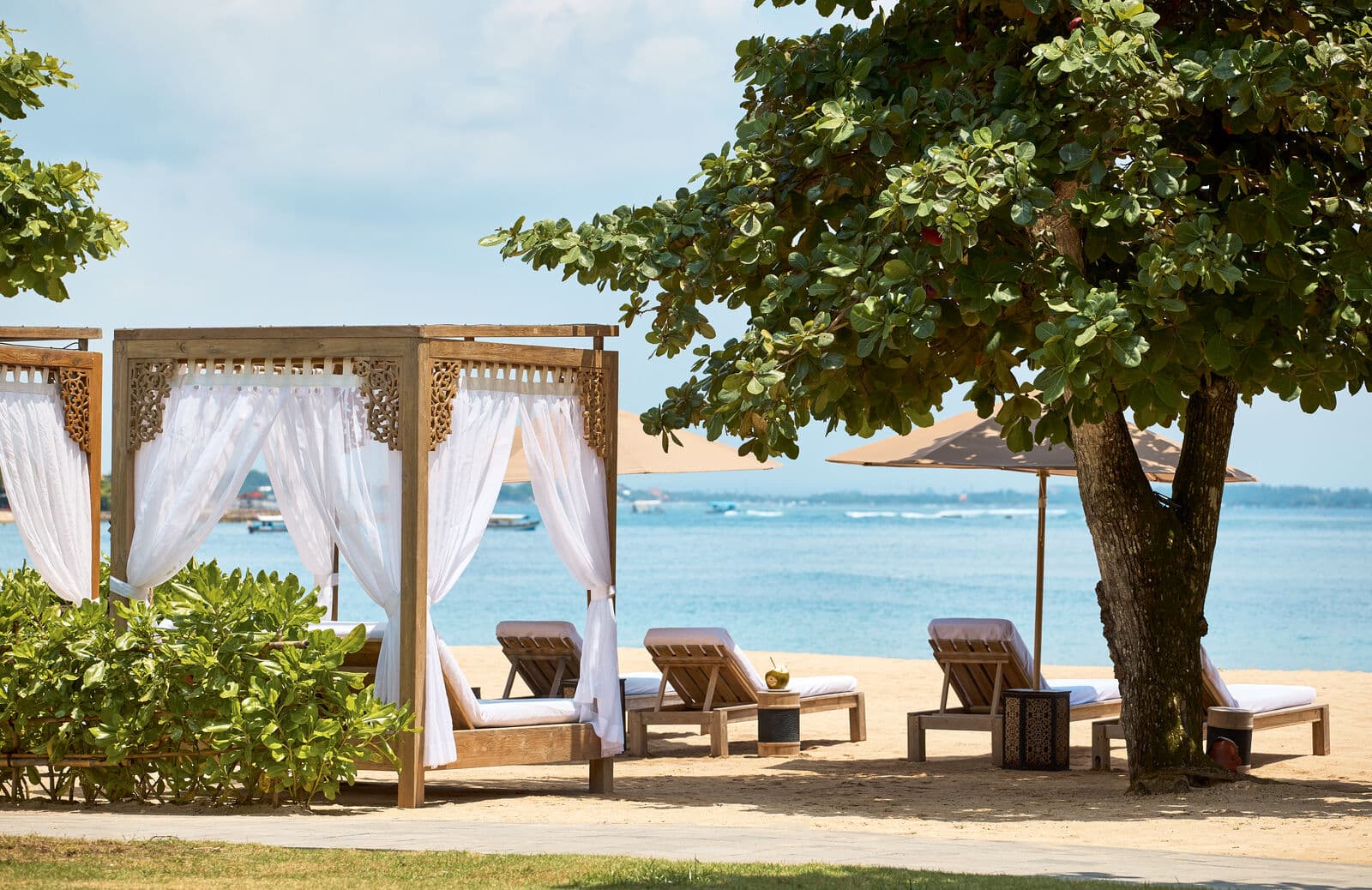
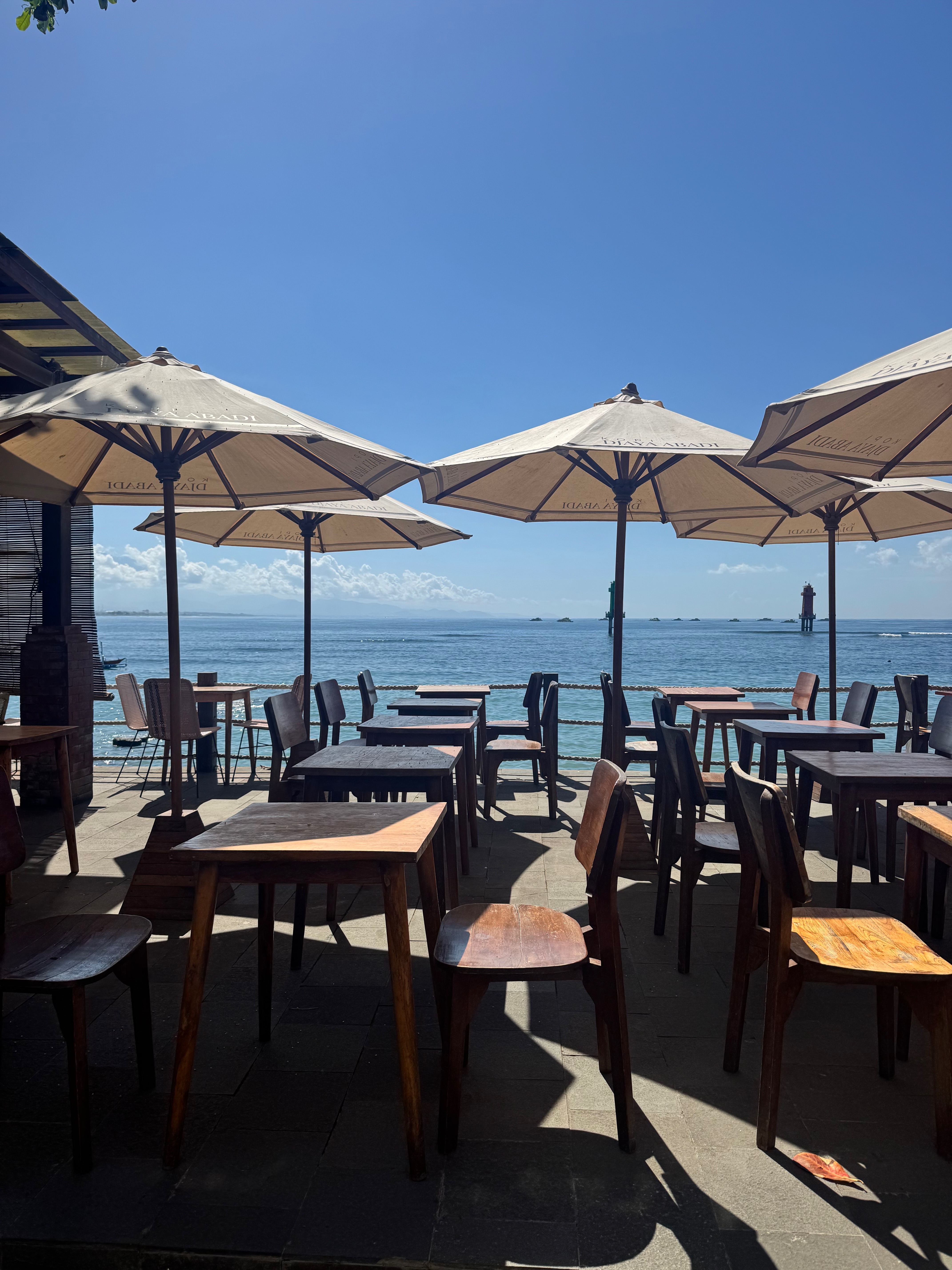
Dinner in Sanur with our feet in the sand.
Walking around Sanur, I understood immediately. (If you are weighing up where to stay in Bali with kids, this is the area I would start with.) The beach path is wide and flat and lined with warungs and cafes, and people — local people, families, elderly couples, stray dogs of extraordinary variety — simply move through it in both directions all day long. The strip of cafes along the harbour near the port is excellent and unself-conscious. We had beach massages in the late afternoon, the kids chased dogs. It is easy breezy and beautiful and I am already thinking about going back.
Bali Beach Hotel, The Heritage Collection
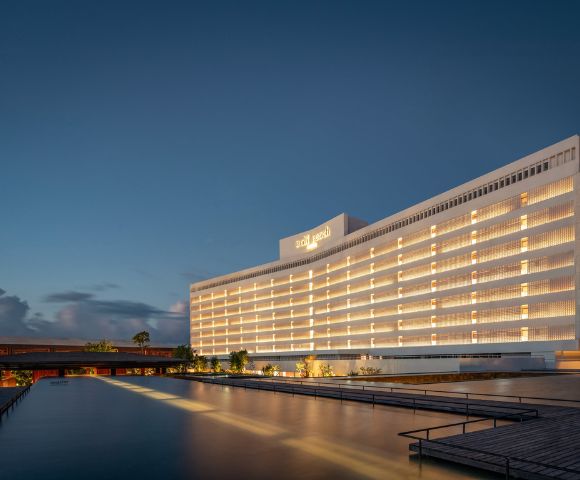
Bali Beach Hotel: the grand dame and first high-rise in Sanur.
We stayed first at Bali Beach Hotel — the original, the grand dame, the one that started it all. Built at the direction of Indonesia's first president, Sukarno, in 1963, it holds the distinction of being the first high-rise hotel in Bali. The building has been fully renovated and reborn as part of the Sanur Heritage Special Economic Zone — more on that in a moment — as Bali Beach Hotel, The Heritage Collection, and the transformation is remarkable.
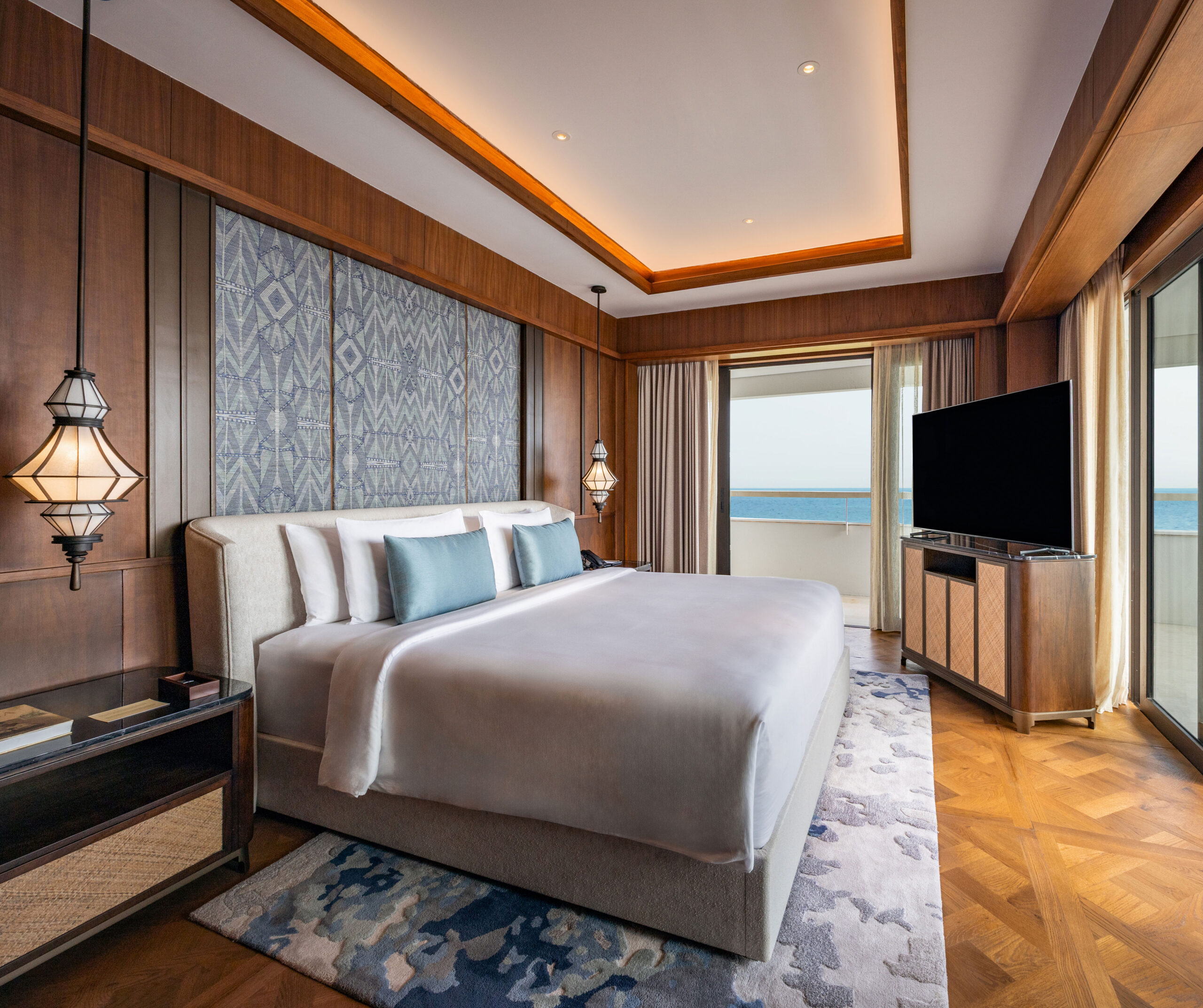
Grand is the right word. The lobby is lofty and airy, all white paint and ocean views that stop you on arrival. It feels like a very beautiful building that has been properly respected rather than stripped and rebranded.
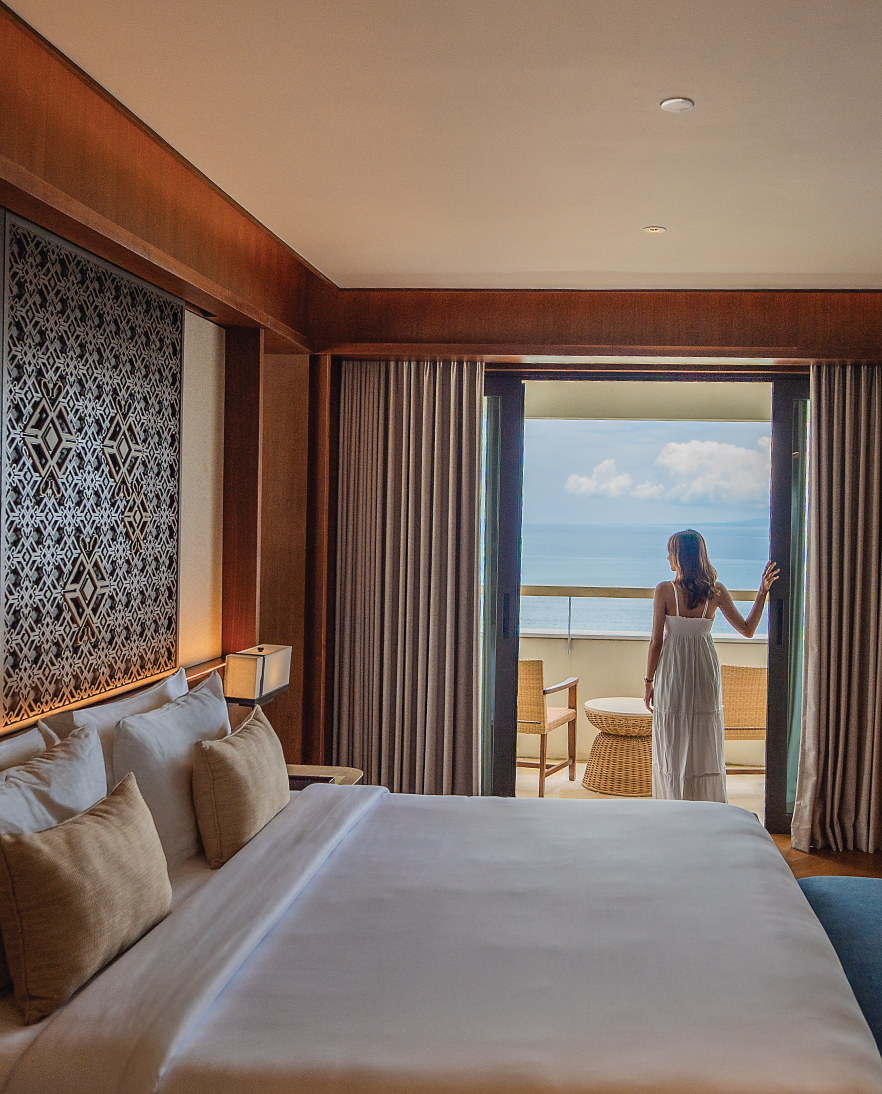
Our Executive Suite was spacious and quietly luxurious — a proper study area, a generous walk-in wardrobe, excellent charging points (bless), and a bathroom with a bath that looked out over the ocean. Max and Lulu had their own separate room, which felt indulgent in the best possible way and meant that Damien and I could linger over dinner in the evenings while they retreated to their room.
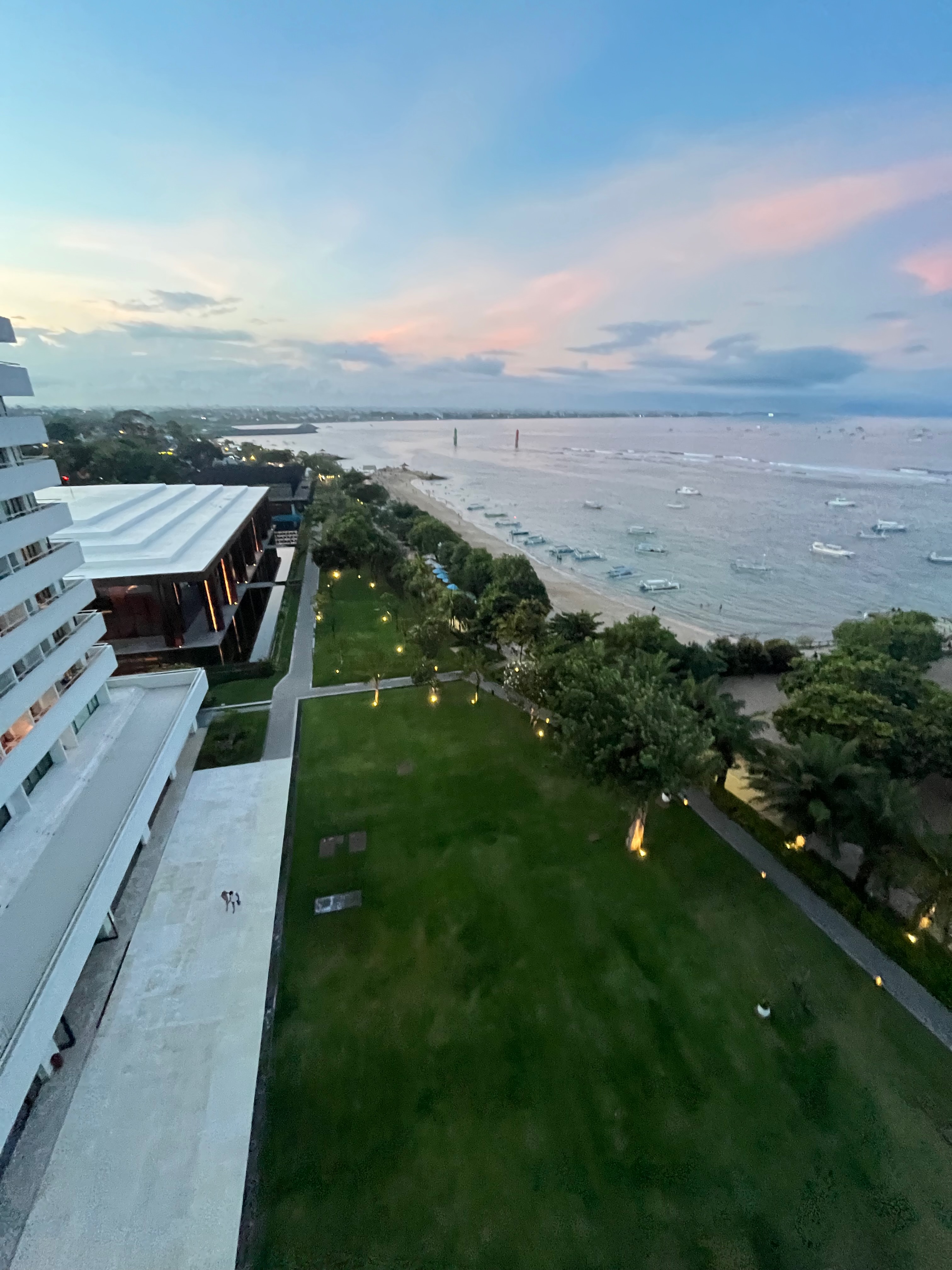
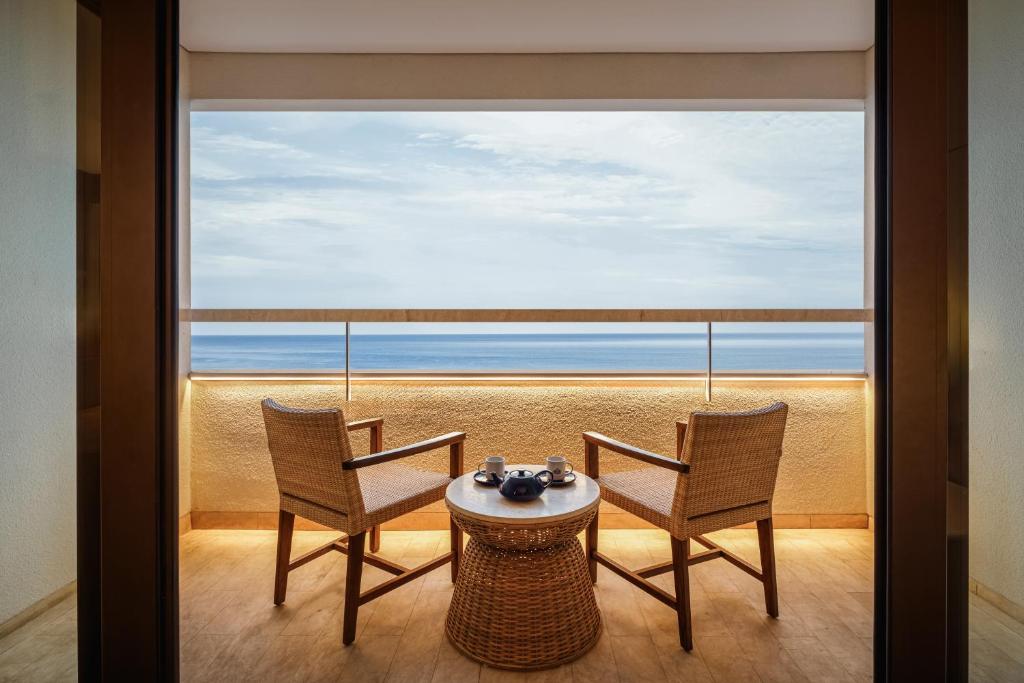
The Bali Beach offers sweeping views over Sanur.
The lower level of the hotel displays a museum-quality installation of traditional Balinese and Indonesian artefacts, developed in collaboration with the National Museum in Jakarta. Ancient instruments, ceremonial objects, traditional weapons, carved works — all lit beautifully, presented not as decoration but as cultural record. Walk through it slowly. It's worth it.
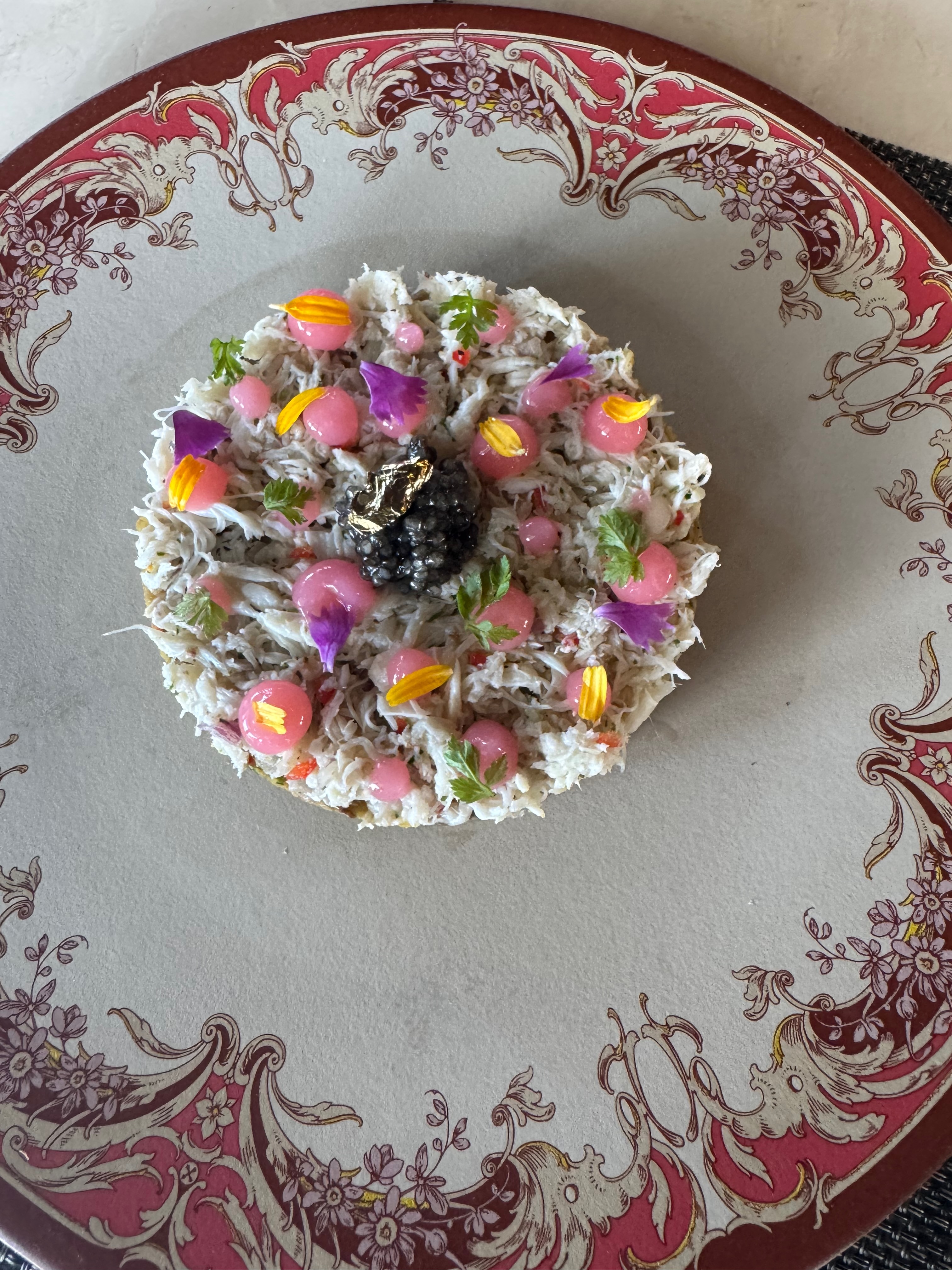
The presentation at Roso Restaurant.
Roso Restaurant served some of the most delicious Indonesian food I've eaten — vibrant, specific, proudly regional. The atmosphere on our first evening was wonderful, full of birthday celebrations and local families marking occasions. Roso's Indo breakfast was next level amazing — if you like having noodles and curries for breakfast, which I do. They had delicious Western offerings too — which the rest of my family happily sampled.
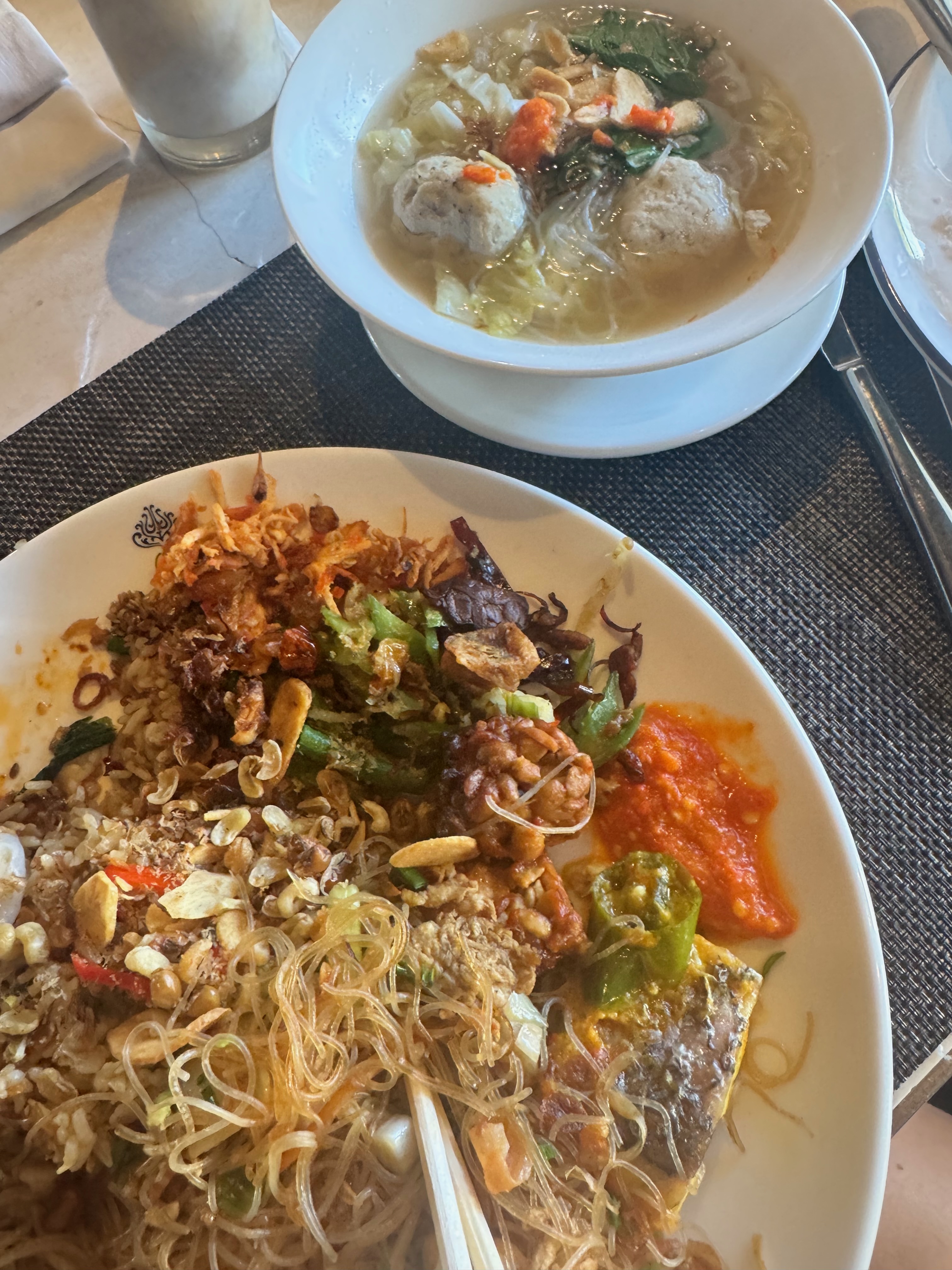
Sig's breakfast of champions.
Arunika, set in an open-air pavilion around the main pool, is also top notch — particularly the Char Kway Teow that is my singular noodle-obsession. Our dinner at Bali Beach Bar and Grill was barefoot-in-the-sand perfection: fresh grilled seafood, warm night air, fireworks appearing unexpectedly over the water like Bali showing off.
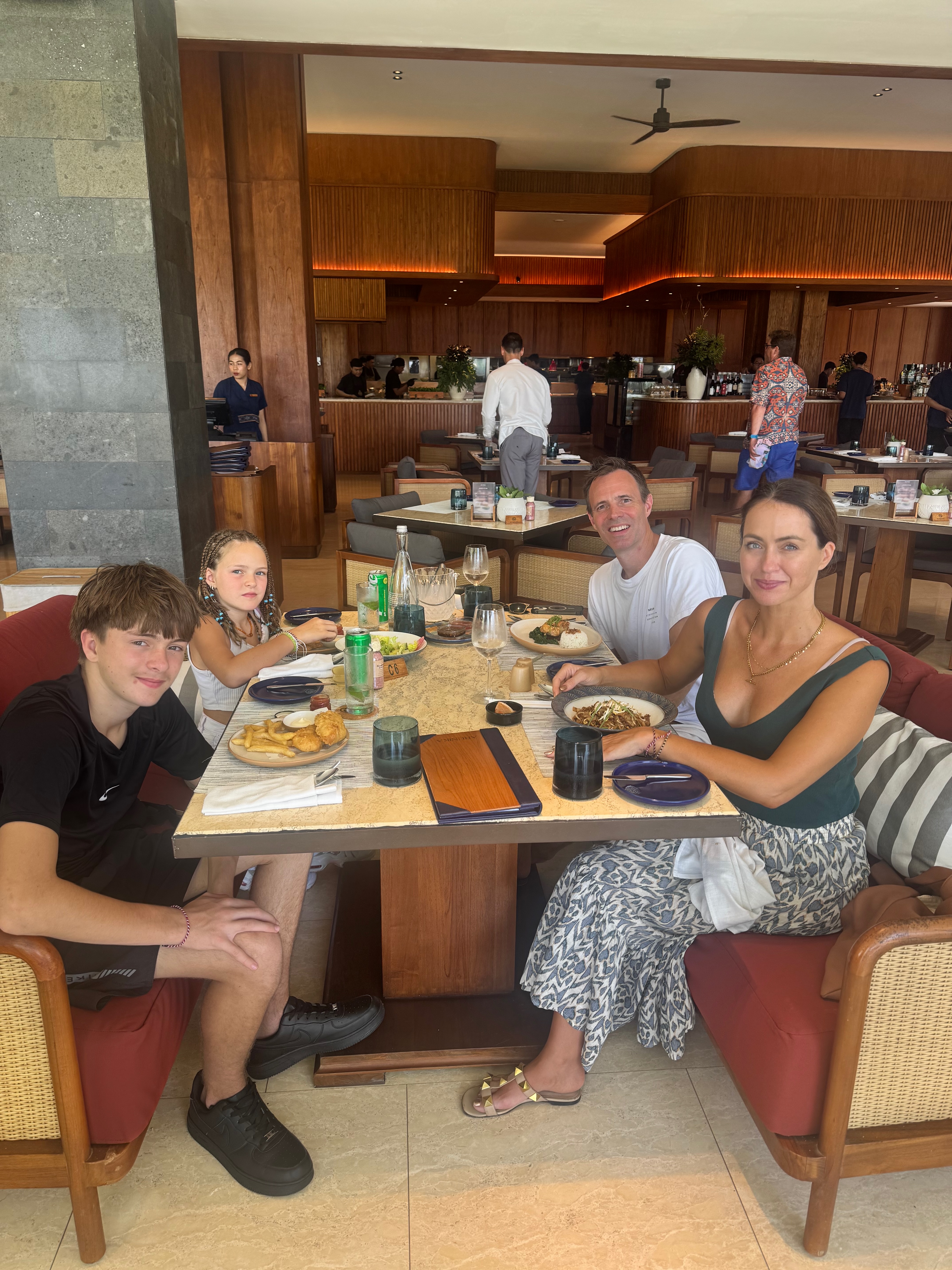
A beautiful lunch with the family at Arunika.
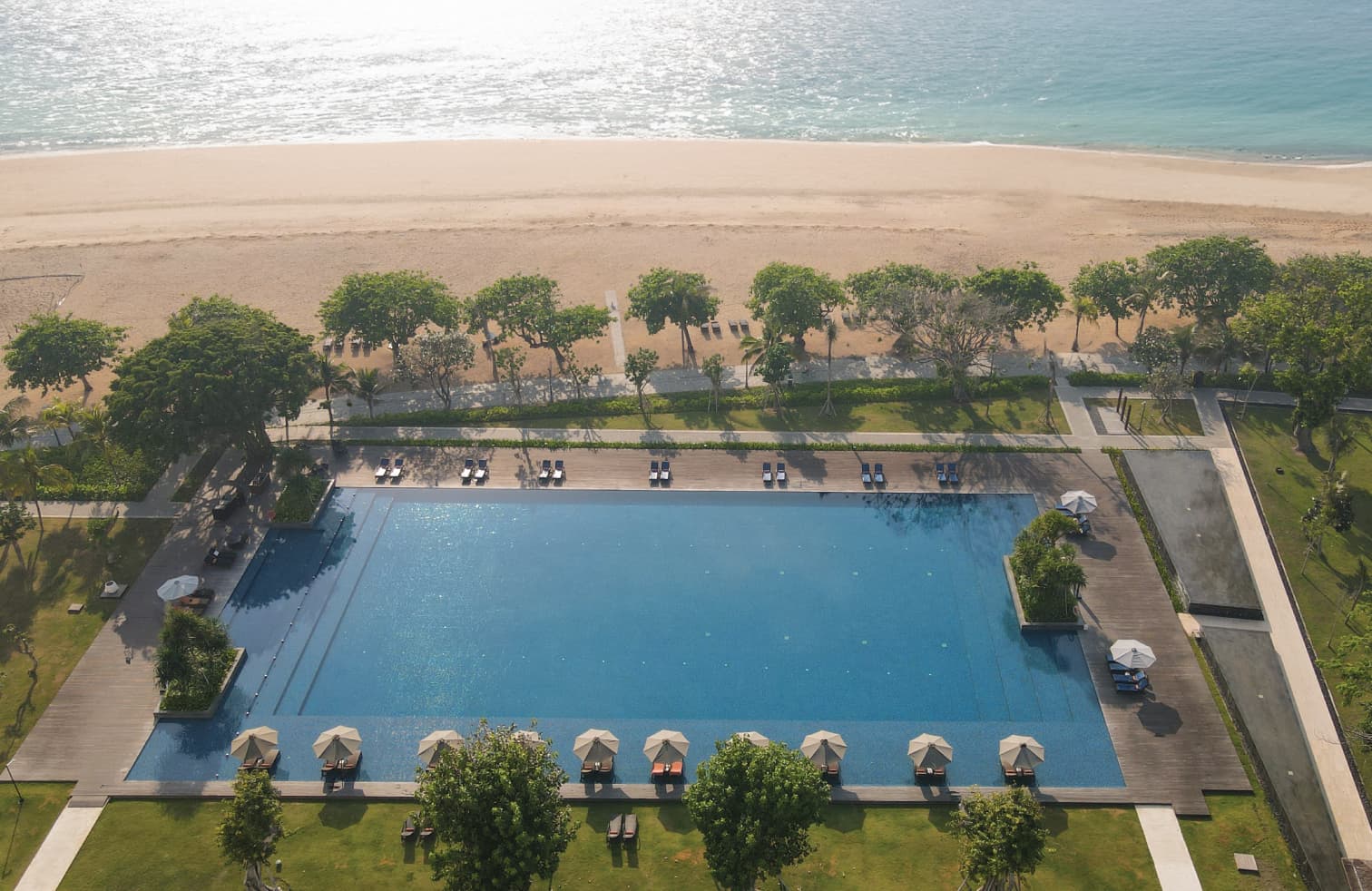
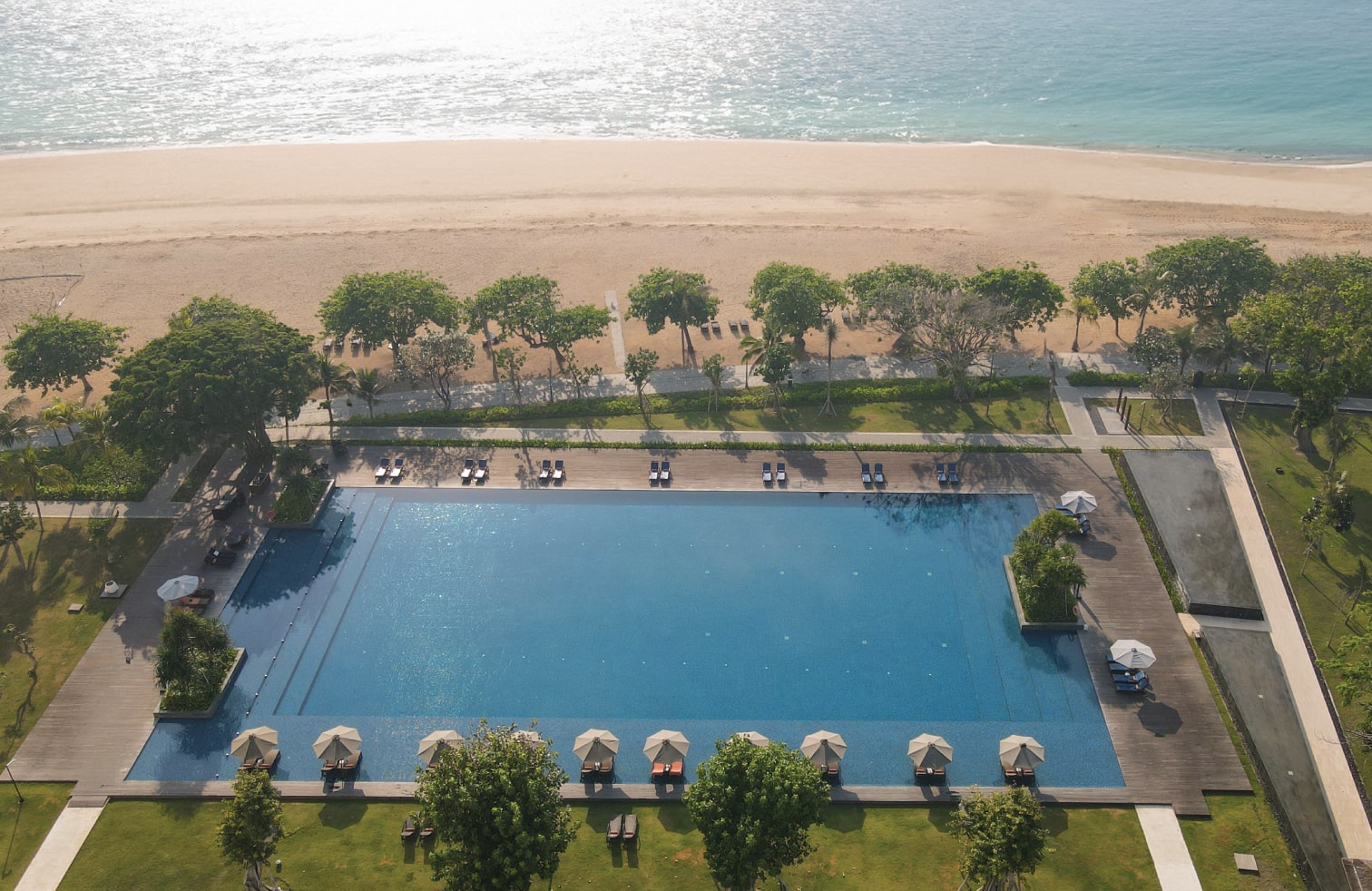
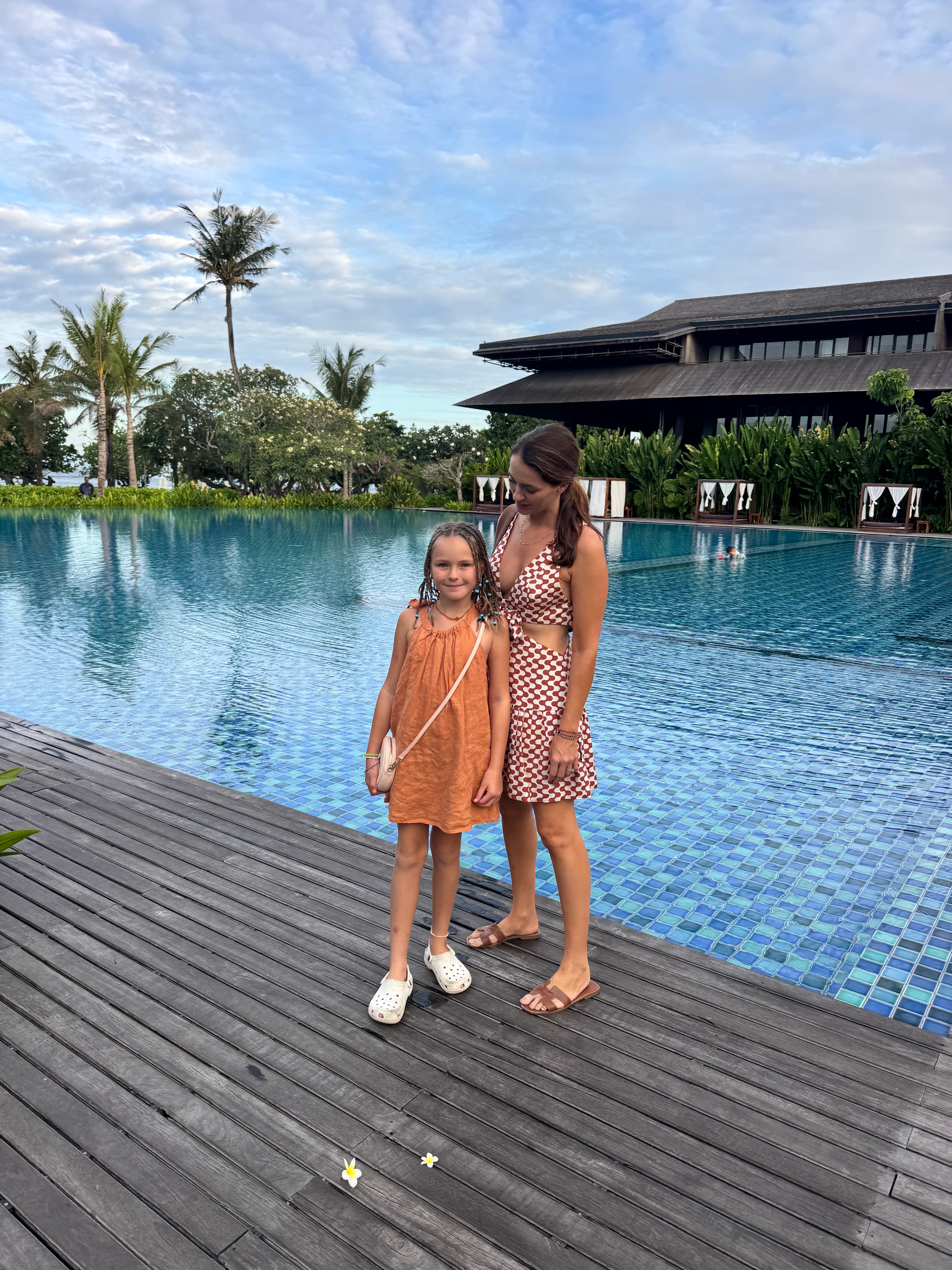
The pool is enormous and has a row of daybeds in the water so you can cool your feet while you sip your rosé.
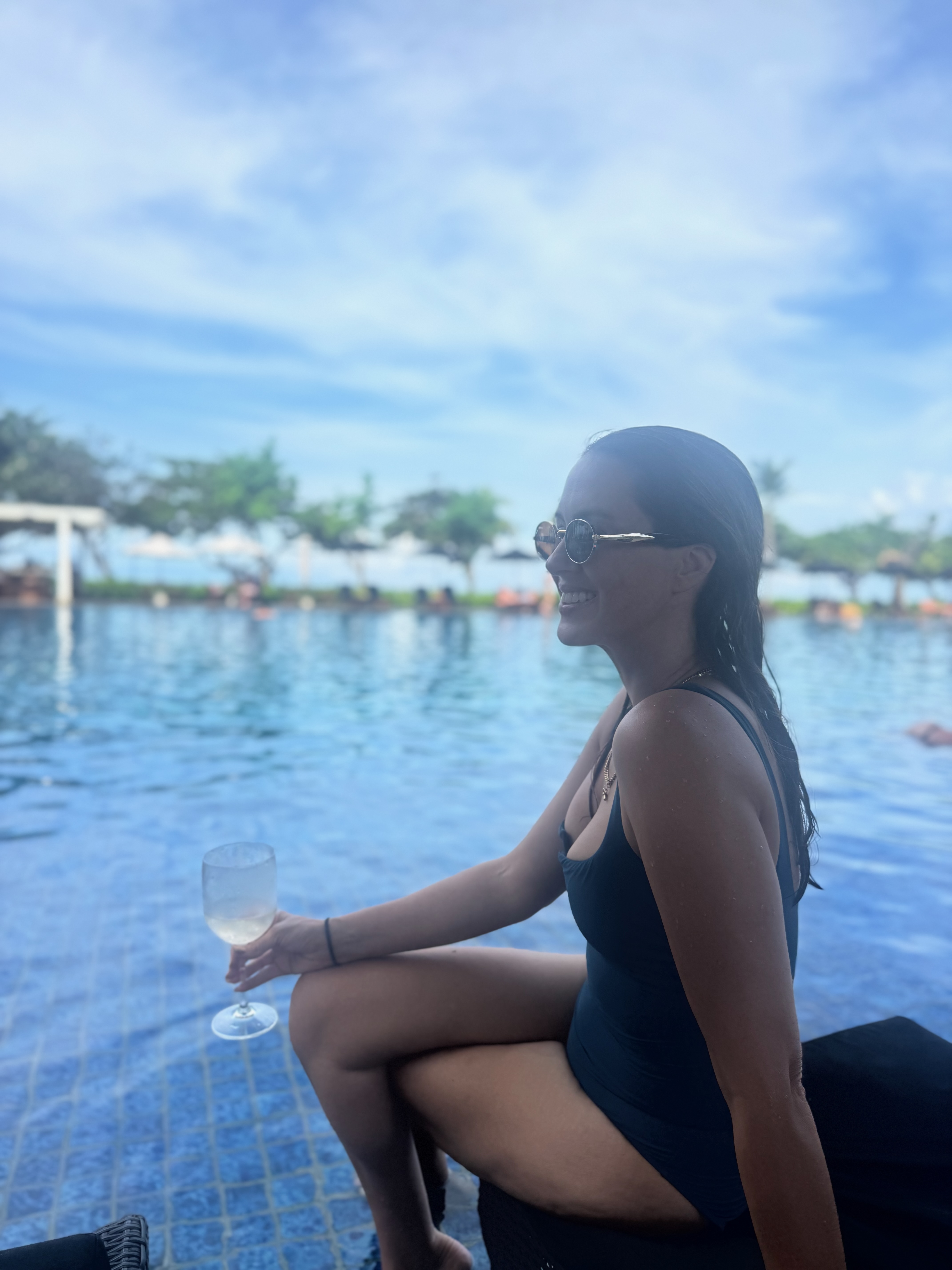
Poolside at Bali Beach Hotel, Sanur.
The Sanur Special Economic Zone: What It Actually Means
Here is where Sanur begins to look less like a quiet beach town and more like one of the most significant hospitality and wellness destinations in Asia. In June 2025, President Prabowo Subianto officially inaugurated the Sanur Health Special Economic Zone — a 41-hectare government-backed coastal enclave dedicated to medical and wellness tourism.
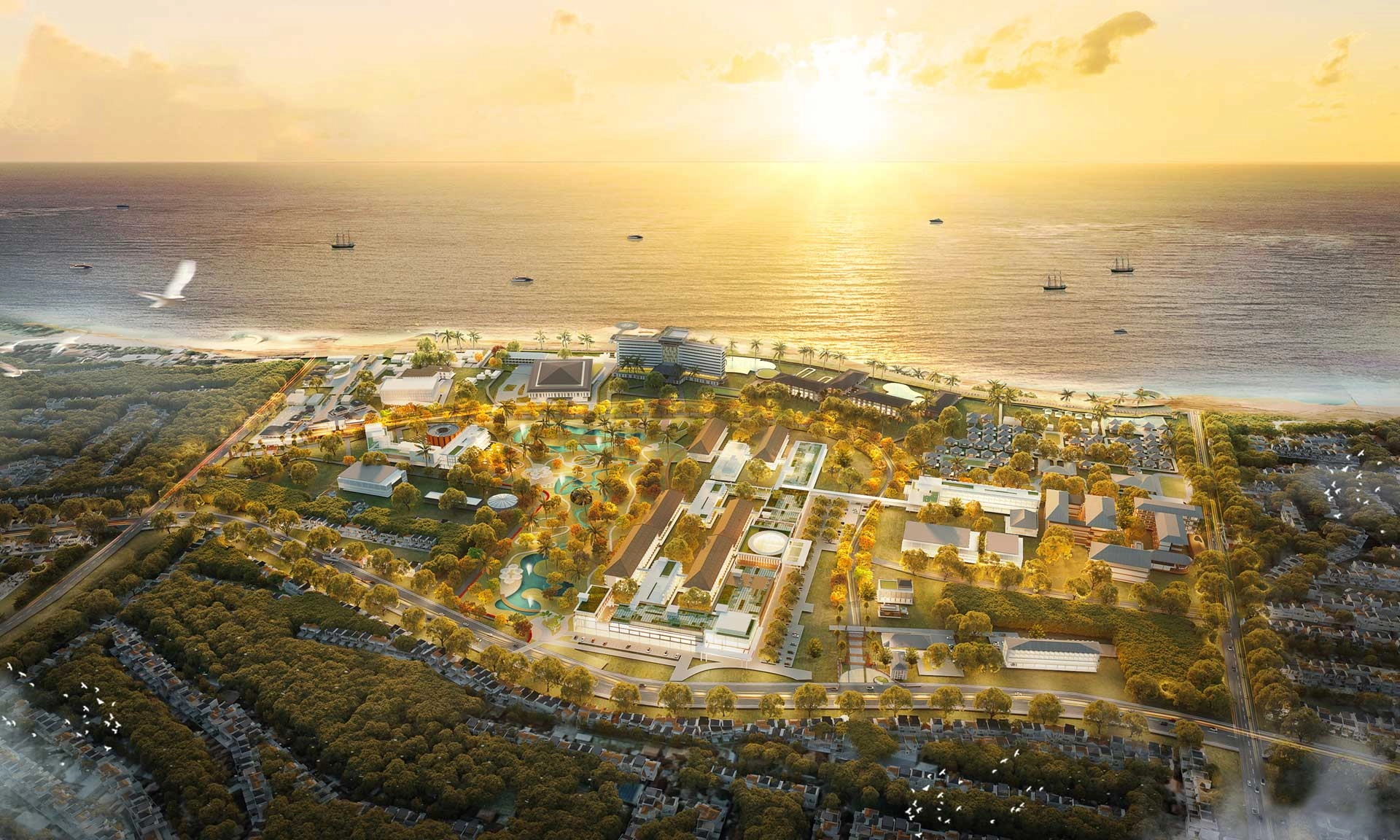
At its centre: the Bali International Hospital — the first hospital in Indonesia permitted to employ foreign doctors under the new SEZ regulatory framework. A collaboration between Indonesia Healthcare Corporation and the globally revered Mayo Clinic, it offers specialisations in cardiology, oncology, neurology, orthopaedics, and regenerative medicine. The vision, as the government has stated plainly, is to give Indonesians — and international visitors — a reason to seek world-class medical care in Bali rather than flying to Singapore or Malaysia. I can tell you from personal experience that it works.
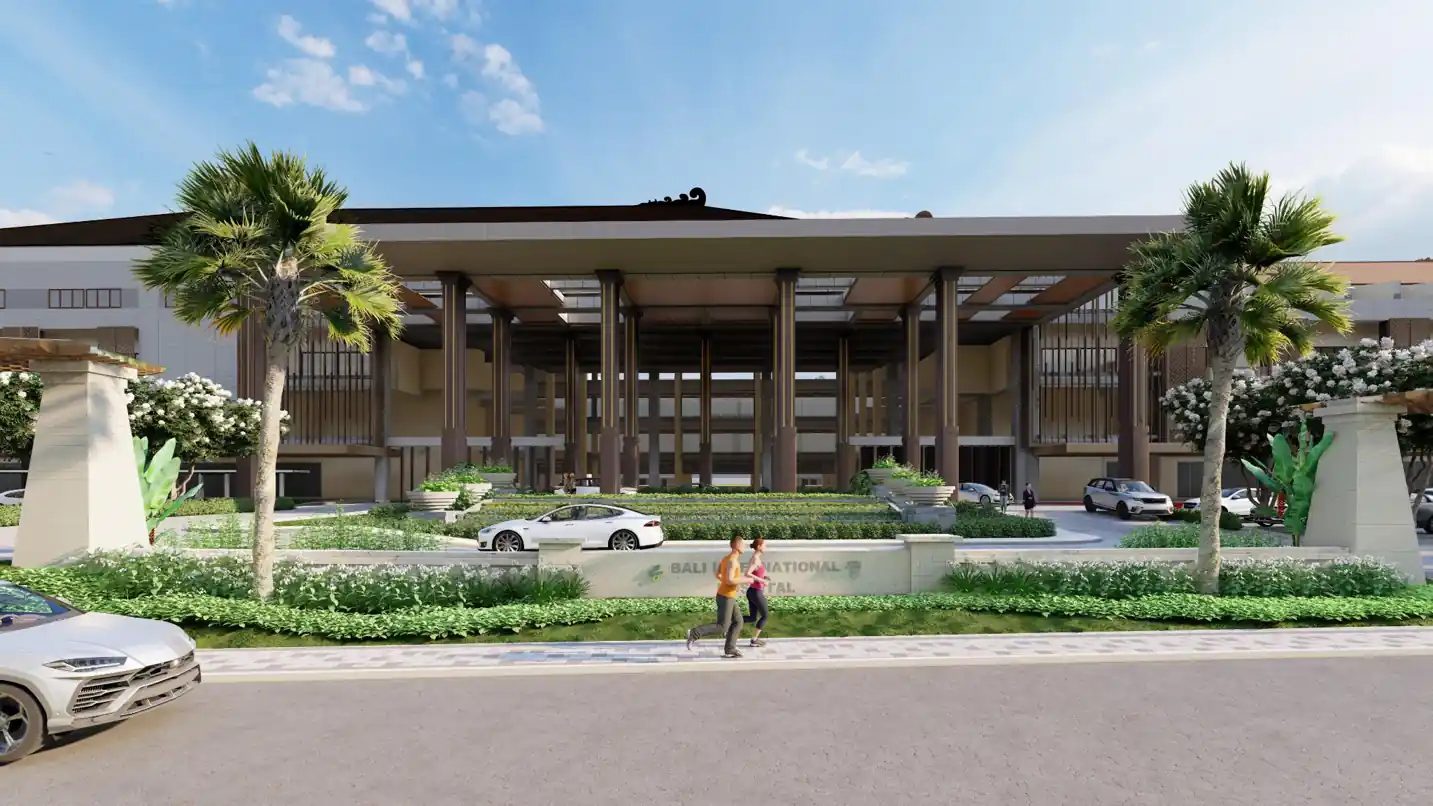
I arrived in Bali with a virus and was coughing so badly on my second night in Sanur that I couldn't lie flat or get a wink of sleep. The next morning, the staff at The Meru swiftly whipped me to the Bali International Hospital via golf buggy. There was no triage queue. No waiting room purgatory. Just a private glass-walled room, a doctor who was efficient and thorough and clearly very good, a vitamin and electrolyte drip that sorted me out with considerable speed. I was there for perhaps ninety minutes, including all treatment time. I left feeling considerably better. If you are unwell in Bali, do not hesitate — this is the place to go.
The Meru Sanur: A First Look at Bali's Newest Luxury Hotel
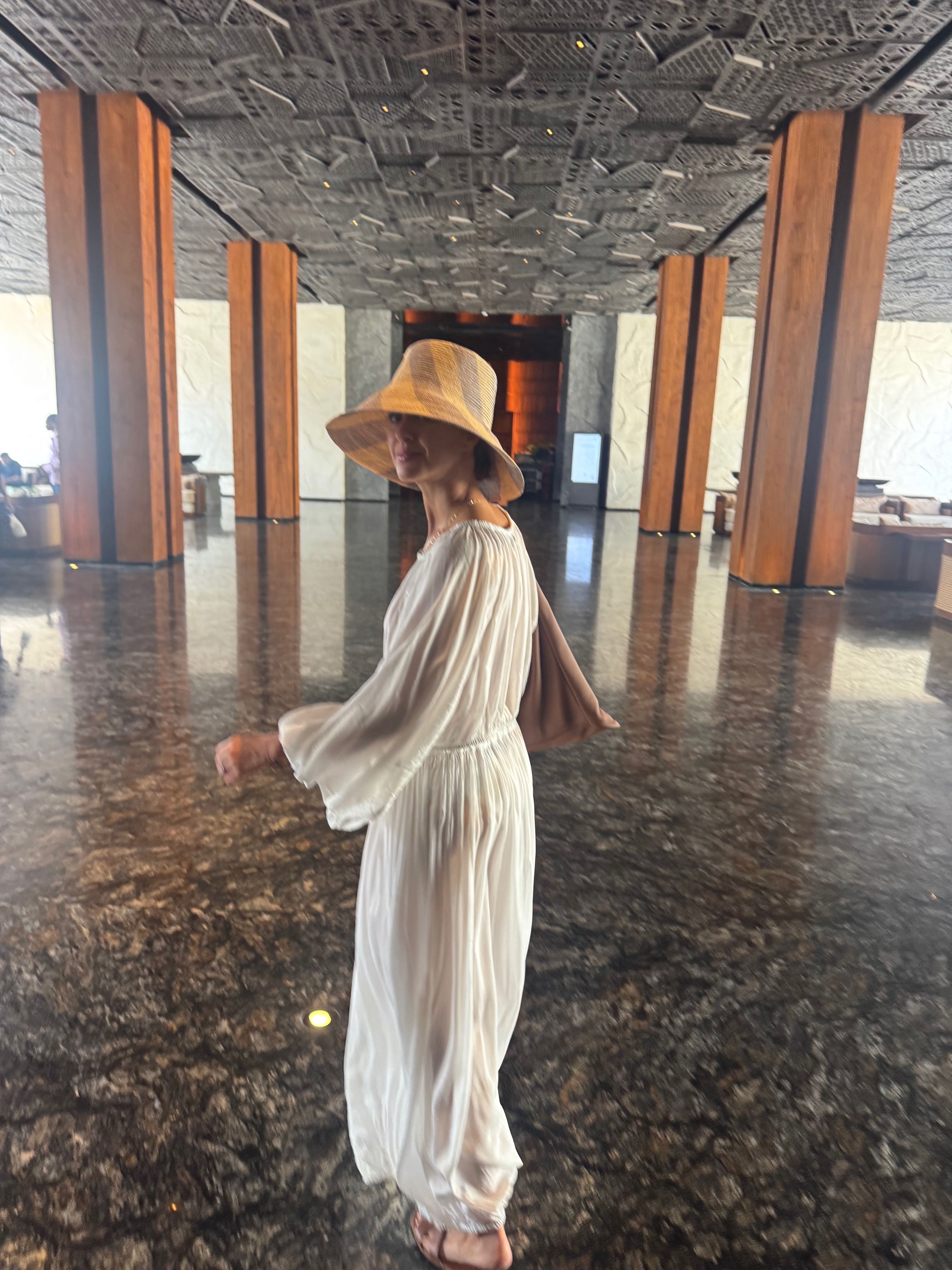
Sig arriving in The Meru lobby.
If Bali Beach Hotel is the heritage anchor of the Sanur SEZ, The Meru Sanur is its dramatic counterpoint — a brand new luxury resort that opened in early 2025, designed by the celebrated Indonesian architecture firm Yolodi+Maria Architects and named for the sacred cosmic mountain of Hindu, Buddhist and Jain cosmology. In Sanskrit, meru means peak or mountain. The divine dwelling place of the gods. Seems fitting for the design of the place.
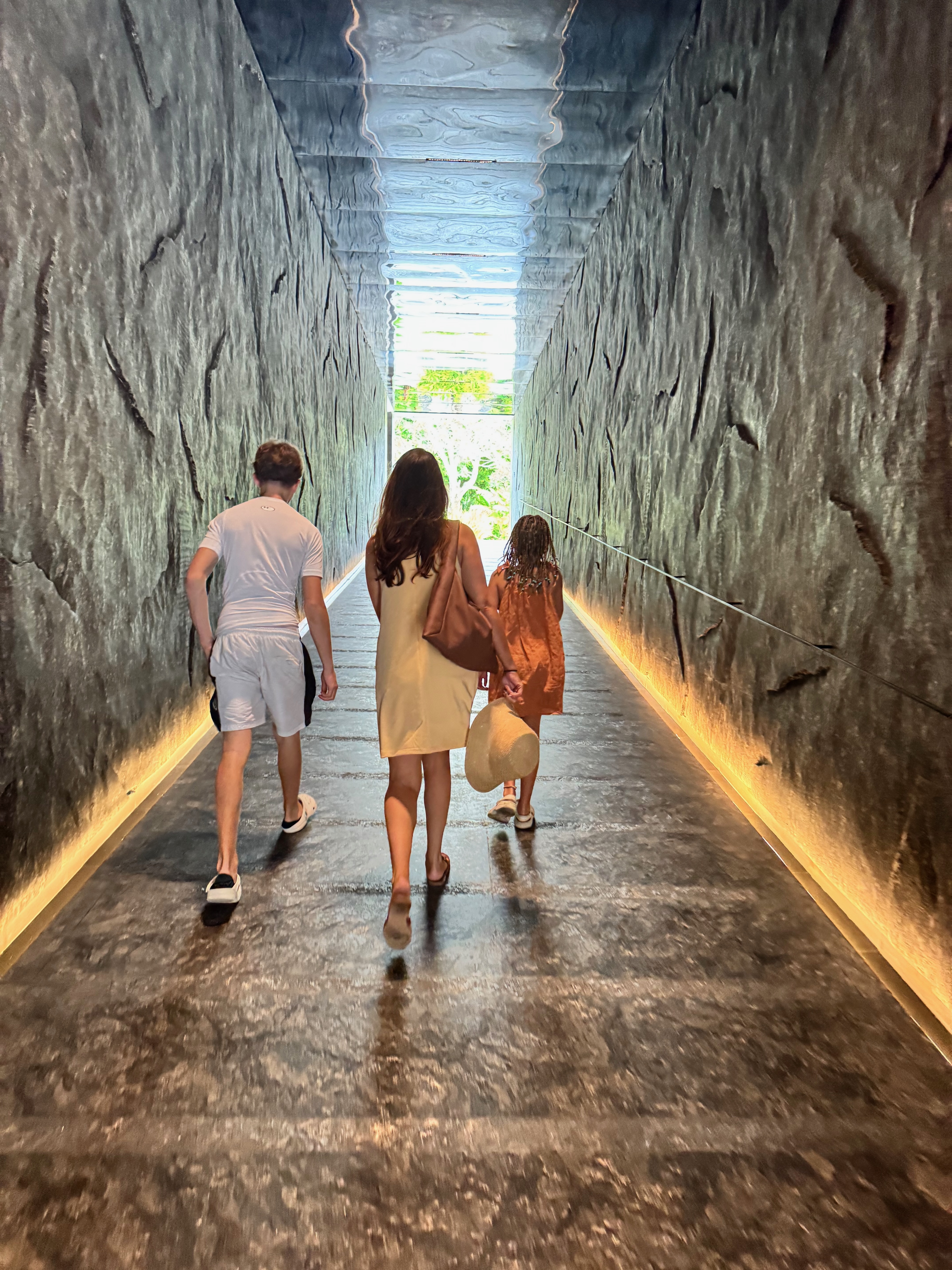
Emerging into the light from the lobby.
You don't walk into any old lobby. You descend a stone staircase into a tunnel.
Arriving at The Meru (and Bali Beach Hotel — they share the same reception) is an experience unlike any hotel arrival I can recall. You don't walk into any old lobby. You descend a stone staircase into a tunnel — a long, beautifully lit underground passage with rough-surfaced marble walls, a glossy marble floor that mirrors the ceiling above it, and small gallery spaces on either side displaying sculptures as you move through. The effect is part museum, part theatre, entirely unexpected.
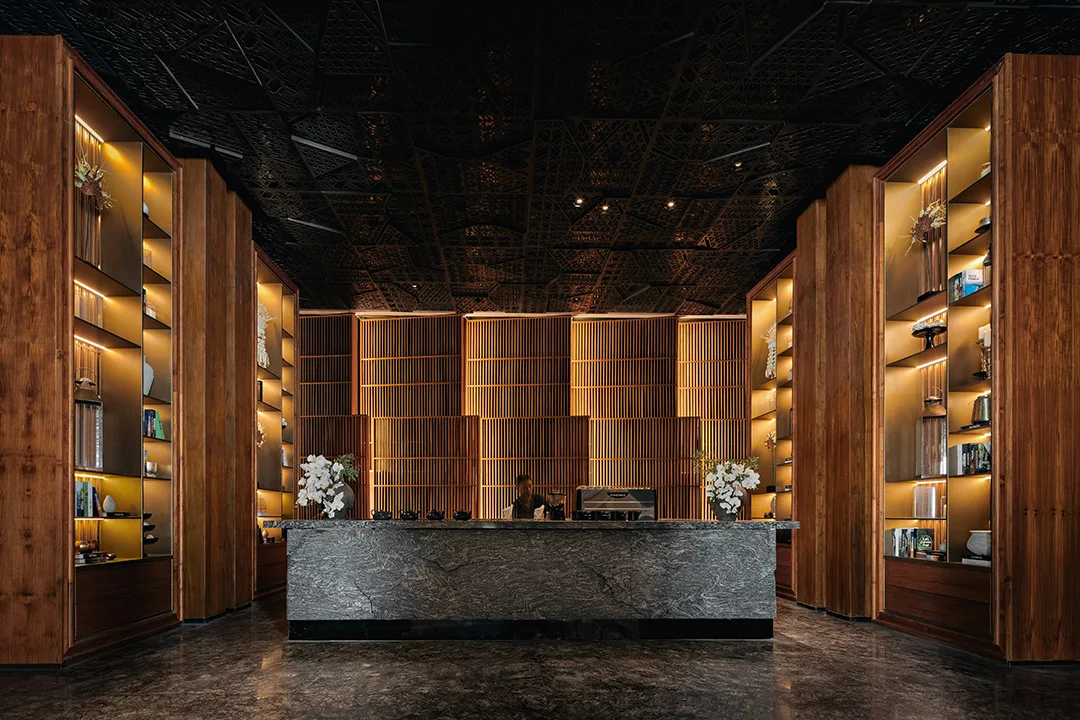
At the far end, the tunnel opens into the lobby proper: carved ceilings, dramatic lighting, bookshelves, lush living spaces on either side of a bar with sculptures throughout, water features catching light. The architects clad the structures predominantly in local ironwood and merbau, and the buildings are connected by open-air bridges designed to allow natural airflow — the whole property breathes in the tropical heat rather than fighting it. It was extraordinary. Maximalist and minimalist at once, if that's possible.
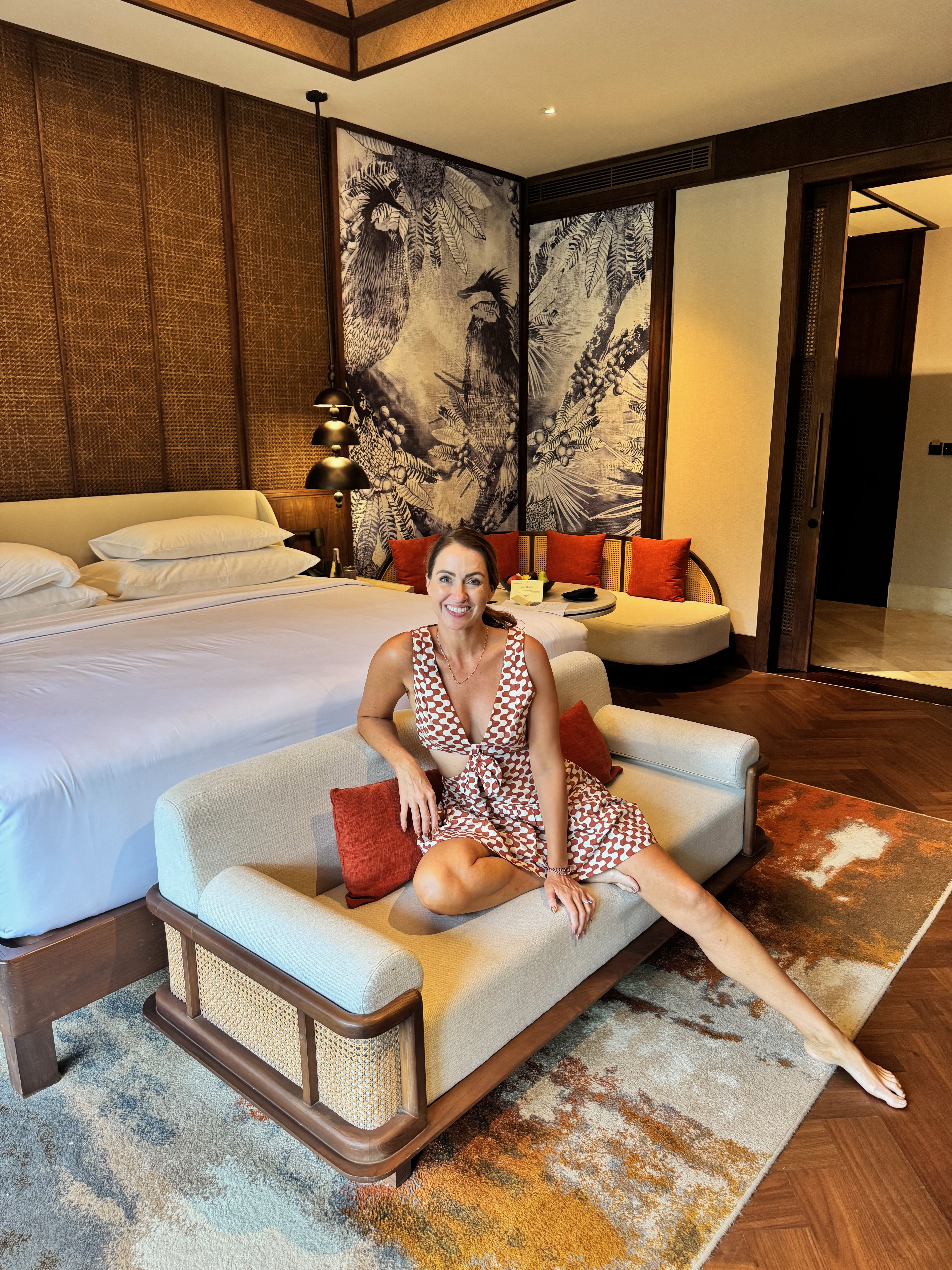
The rooms at The Meru feature a luxurious and harmonious design.
Our Tropical Suite was a ground-floor retreat opening onto dense tropical foliage, with a huge entry, minibar, dressing room and built-in robe and bathtub positioned to look out to the garden. We had a little courtyard complete with a daybed and high verdant foliage all around. I took my medicine and had the best sleep in weeks shrouded in a cumulus cloud of soft bedding.
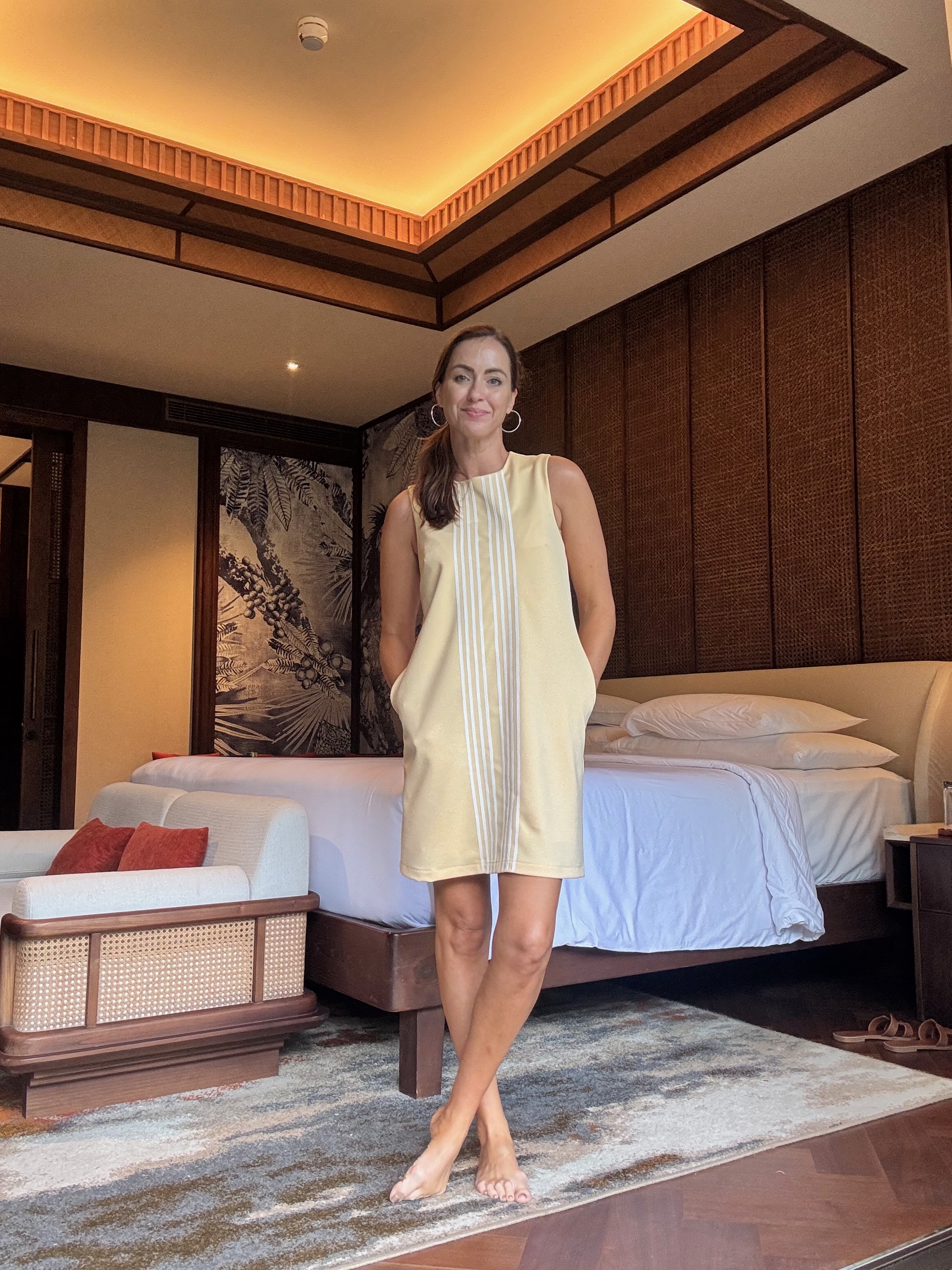
The bed deserves its own love letter.
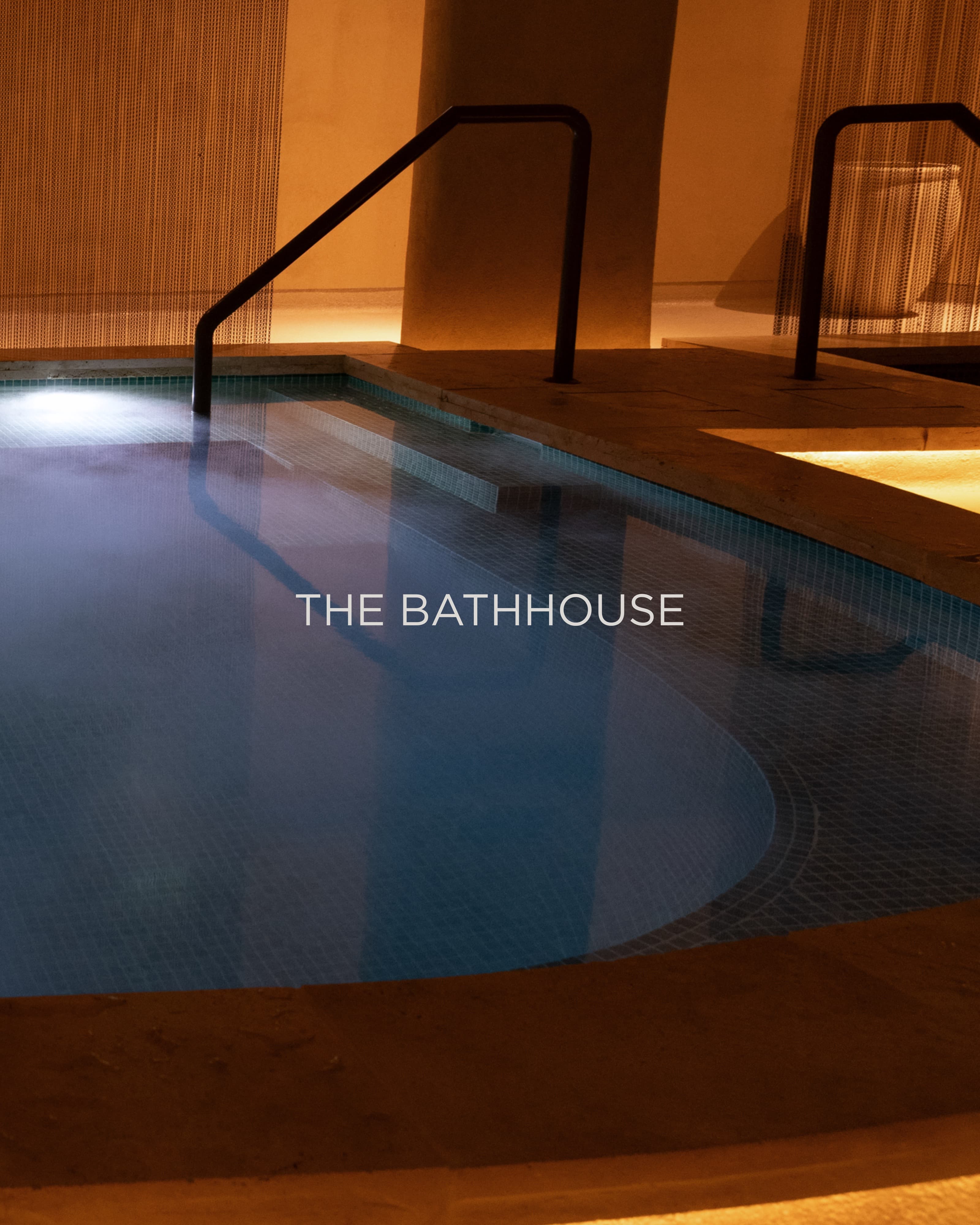
The Crystal Quartz Treatment at Svasana Spa
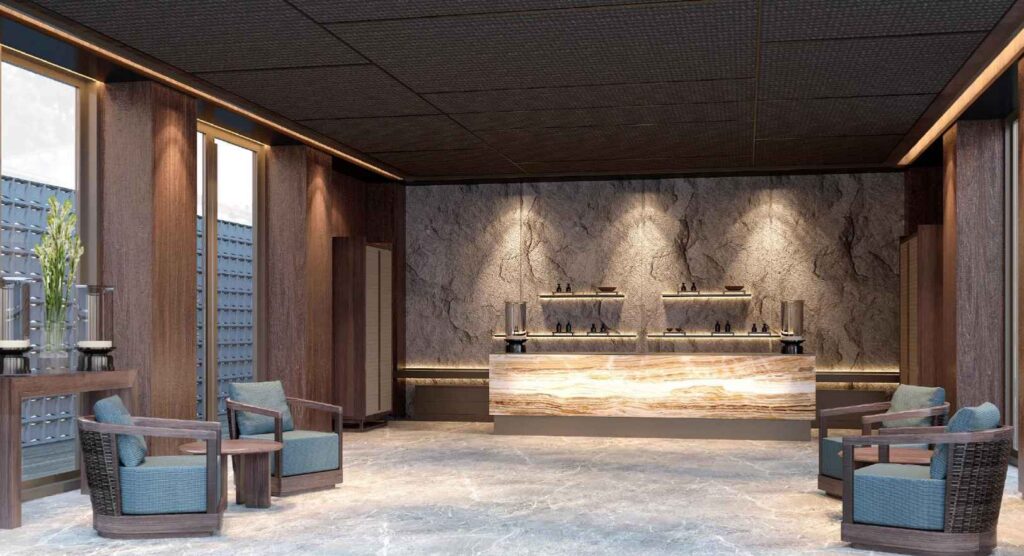
We need to talk about the spa. Svasana Spa at The Meru is built around an ancient Javanese healing philosophy rooted in the Primbon — a body of traditional Javanese knowledge compiled over centuries in handwritten manuscripts, originally passed between palace scholars. The Primbon uses the circumstances of a person's birth — particularly their weton, the combination of their birth day in the seven-day week and the five-day Javanese calendar cycle — to understand character, elemental energy and the forces shaping a life. Before my treatment began, my therapist Ibu asked for my birthdate and worked through my weton reading. I was told I have an Earth element, which in this system means I am grounded and realistic, but also prone to overthinking. She was not wrong. An Earth symbol was drawn on my treatment bed and specific oils were chosen to suit.
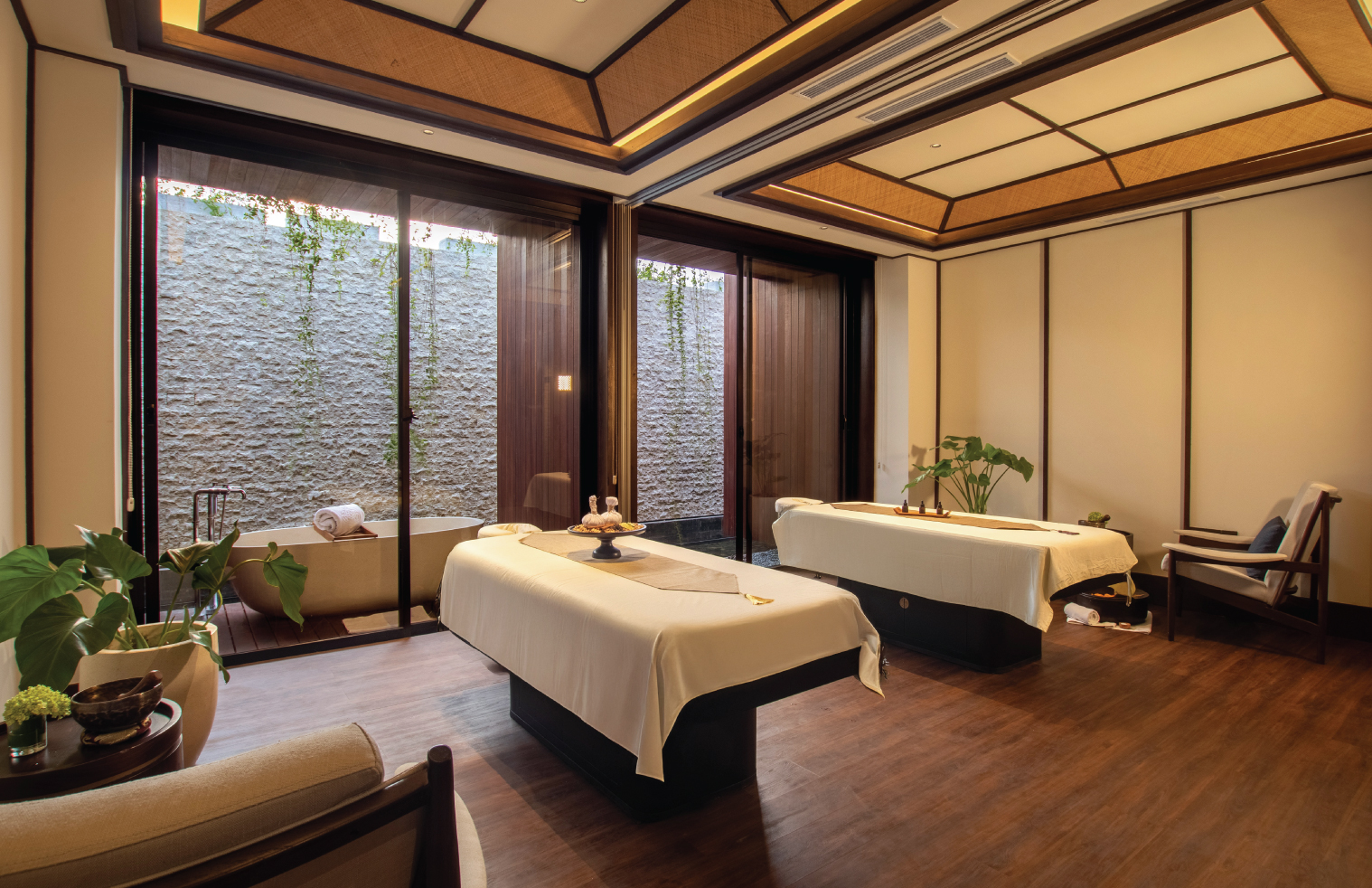
The treatment room itself was extraordinary — its own balcony, a bath looking out to garden greenery, a private ensuite, designed with the same minimalist precision as the rest of the property. The spa is set around a great open quadrangle edged with black reflection ponds, airy and serene, the kind of architecture that makes you slow down before you've even removed your shoes. And then there's the crystal bed.
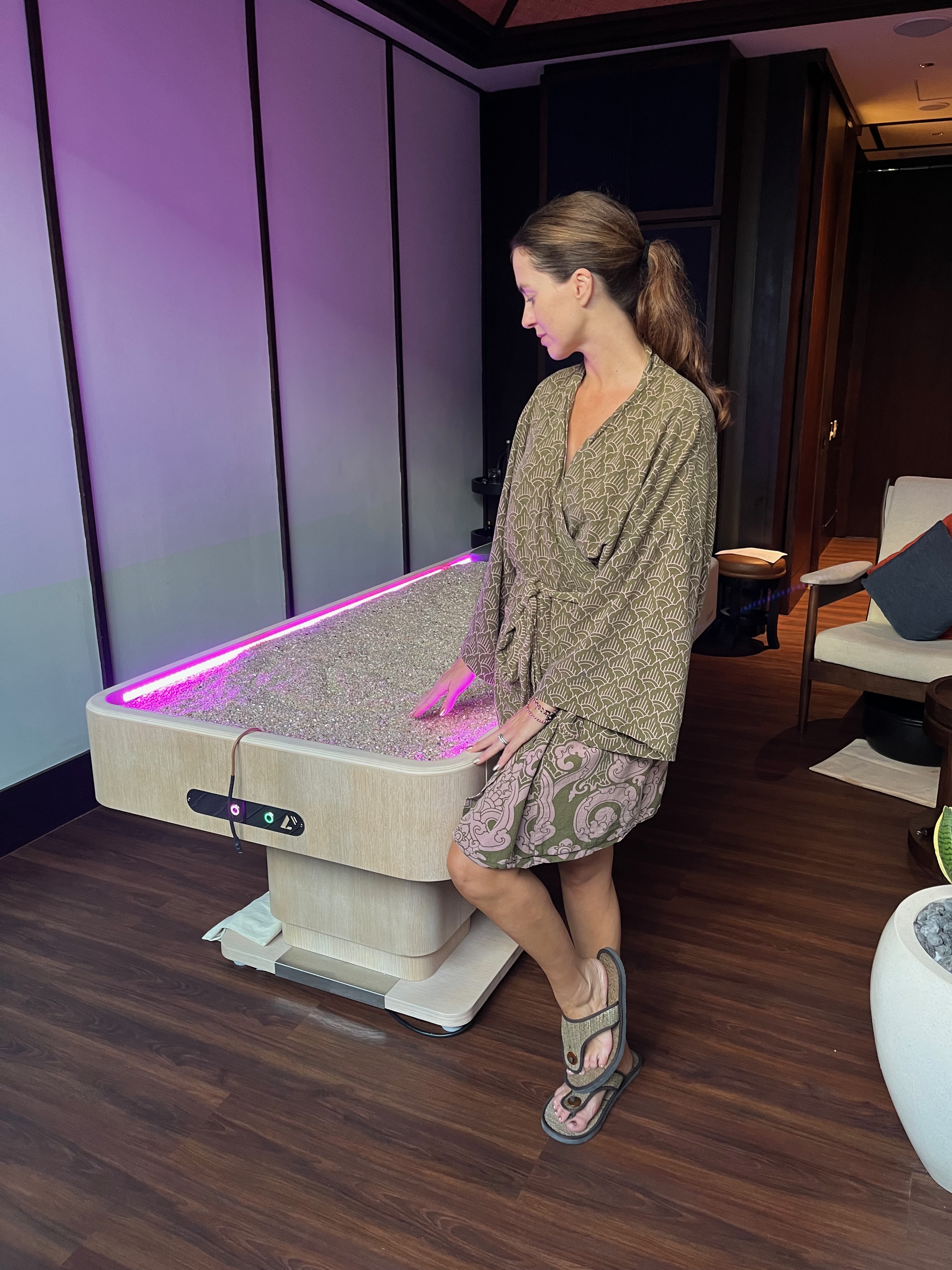
The treatment surface is a tray, approximately ten centimetres deep, filled with thousands of tiny polished crystals — smooth, warm, each one representing a different chakra and element. Between you and the crystals: a sheet and a towel. The bed moulds to the contours of your body in a way no conventional massage table does. You feel held. Cradled by natural earthly elements, which sounds like marketing language until you are actually lying on one and it doesn't anymore.
A word of warning: the crystals generate significant warmth. If you are menopausal and hot-flushing, think before booking. I found it quite intense on my front, and by the end of that portion I was ready to turn over. The turning over is, it turns out, the best part. My therapist's 90 minutes of intuitive kneading was gently warmed by the crystals beneath me, and I felt the months of accumulated tension flow out of my body and into the earth below. I emerged two hours later quieter, lighter, and slightly astonished.
Why Sanur Should Be on Every Bali Itinerary
We had been in a Canggu villa for three nights before arriving in Sanur, and that transition was everything. (For another perspective on Bali's best luxury resorts, our review of The Mulia in Nusa Dua is worth reading.) The villa had been wonderful. Canggu had been full-on. Sanur was the circuit breaker we needed: a few days of beauty, ease, genuine luxury and genuine culture before we crossed to Nusa Lembongan for the island portion of the trip.
My strong recommendation, if you are planning a Bali itinerary — whether it is a family getaway or a couples retreat — is to build in a few nights at each hotel. They're different properties with different energies — the heritage grandeur of Bali Beach Hotel on one side (and the views!), the dramatic new vision of The Meru on the other — and together they give you something a single hotel can't. The restaurants share menus across the complex, which means you can eat at Roso one night and Arunika the next without leaving the zone. Sanur, as Karlie will tell you with the quiet satisfaction of someone who was right a decade before everyone else caught up, is not a compromise. It is not the place you end up when the better areas are full. It is the place you choose when you know what you're doing.
Sanur is not a compromise. It is the place you choose when you know what you're doing.
Sigourney was a guest of Bali Beach Hotel, The Heritage Collection, and The Meru Sanur. Both properties are part of the Sanur Health Special Economic Zone. For more information visit themerusanur.com and @balibeachsanur on Instagram.